Yoga for runners: poses for tight calves, hips, and hamstrings

Running asks your legs to do one thing thousands of times. A short yoga practice gives them the range running leaves out.
Running is wonderfully simple. You move forward, in one direction, thousands of times in a row. That repetition is part of why it works, and part of why many runners end up with calves, hip flexors, and hamstrings that feel tight, and a body that mostly knows how to move one way.
Yoga can help fill in what running leaves out: range in the hips, length through the back of the legs, rotation in the spine, and balance on one foot. This guide covers the areas that tend to need attention, a short sequence to try, and how to fit it around your training without making your runs feel worse.
What running tends to leave out
Running keeps the hips working in a fairly small range, mostly forward and back. It rarely takes the hip flexors into full extension, rarely rotates the hips, and rarely asks the upper back to twist. Over months, many runners notice that deep lunges, cross-legged sitting, or reaching for their toes feel harder than they used to.
None of that means something is wrong. It means the body adapts to what it does most. A little regular yoga gives it a wider menu.
Eight poses worth learning
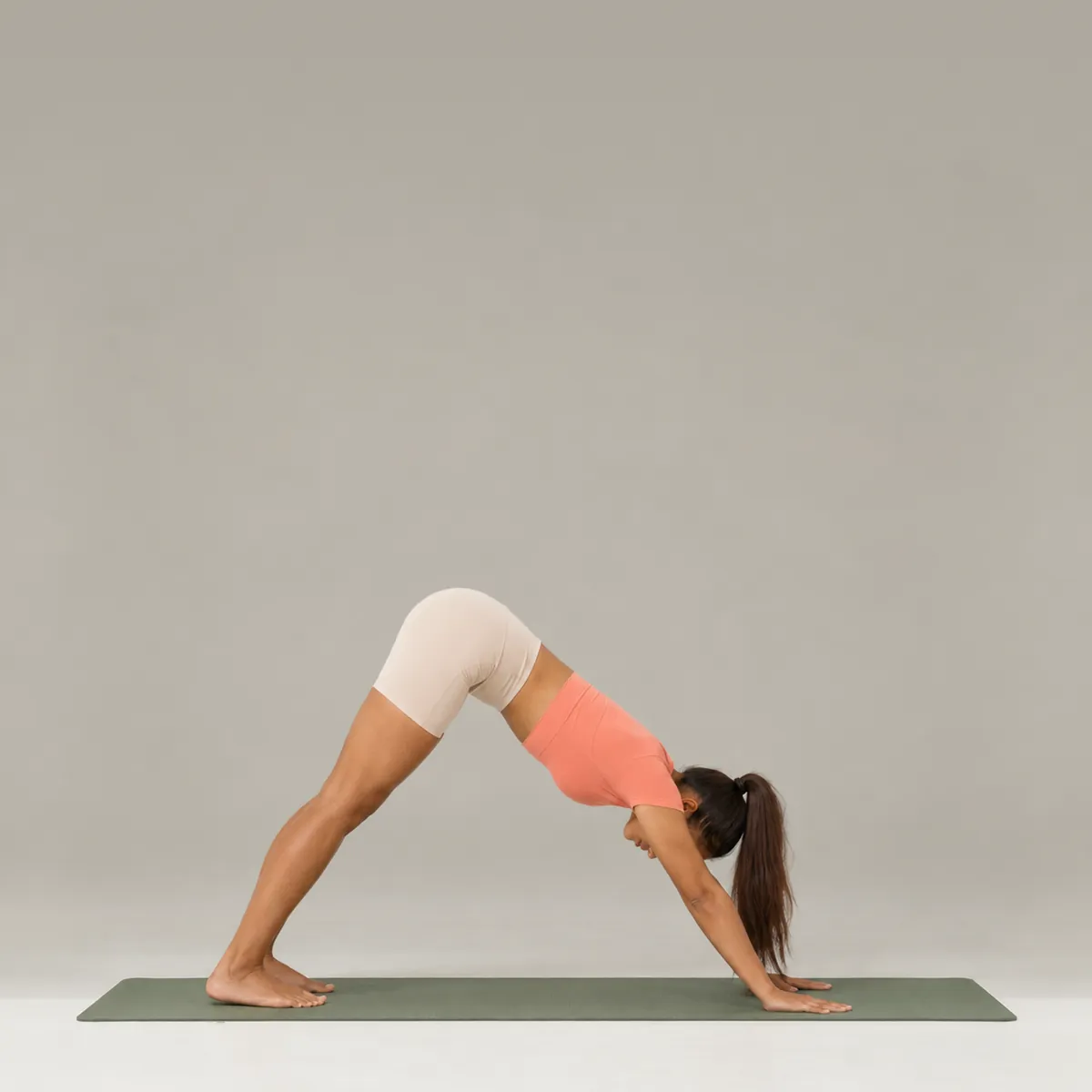
- Downward facing dog, pedaling the heels one at a time to ease into the calves.
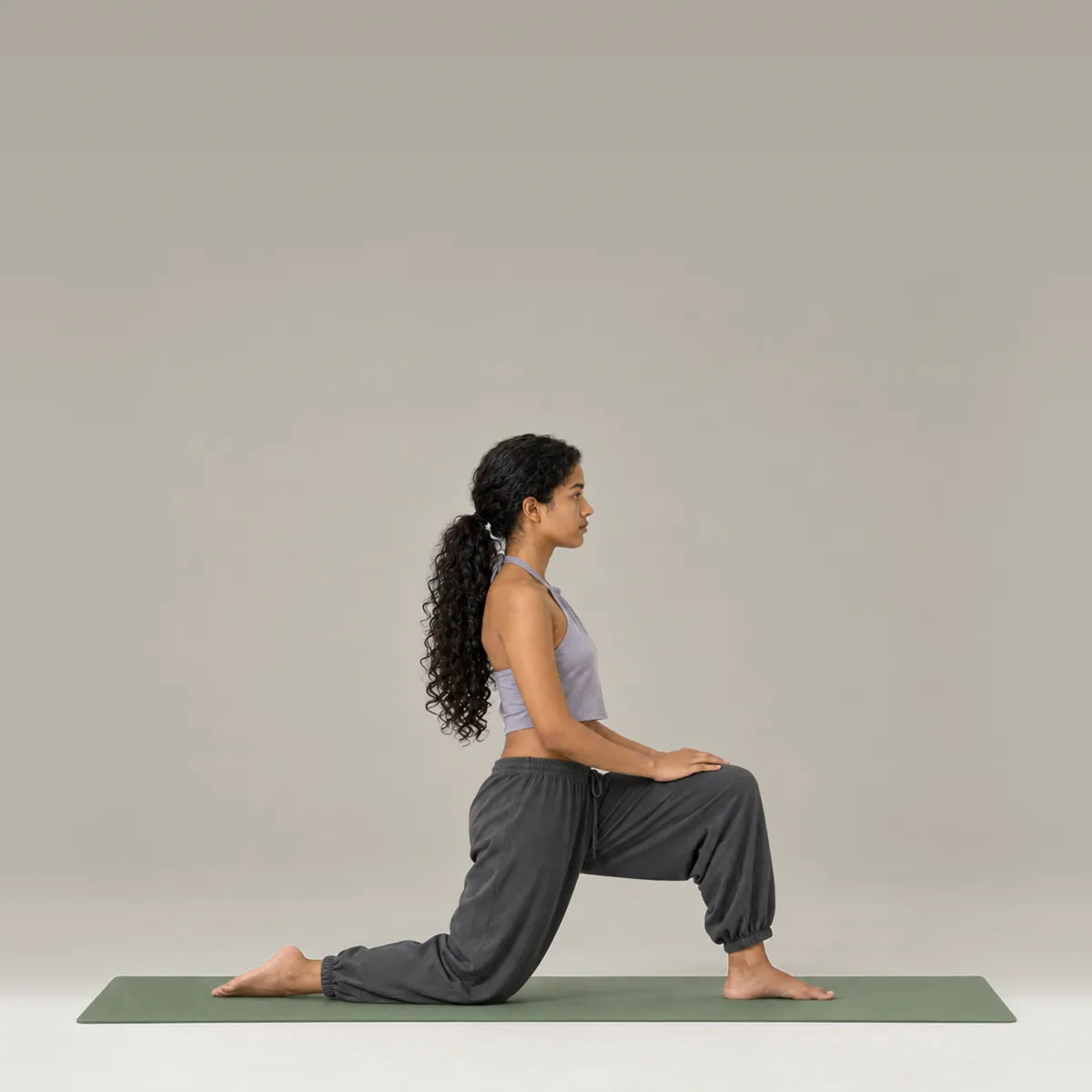
- Low lunge, for the hip flexors that running keeps short. Keep the front knee over the ankle.
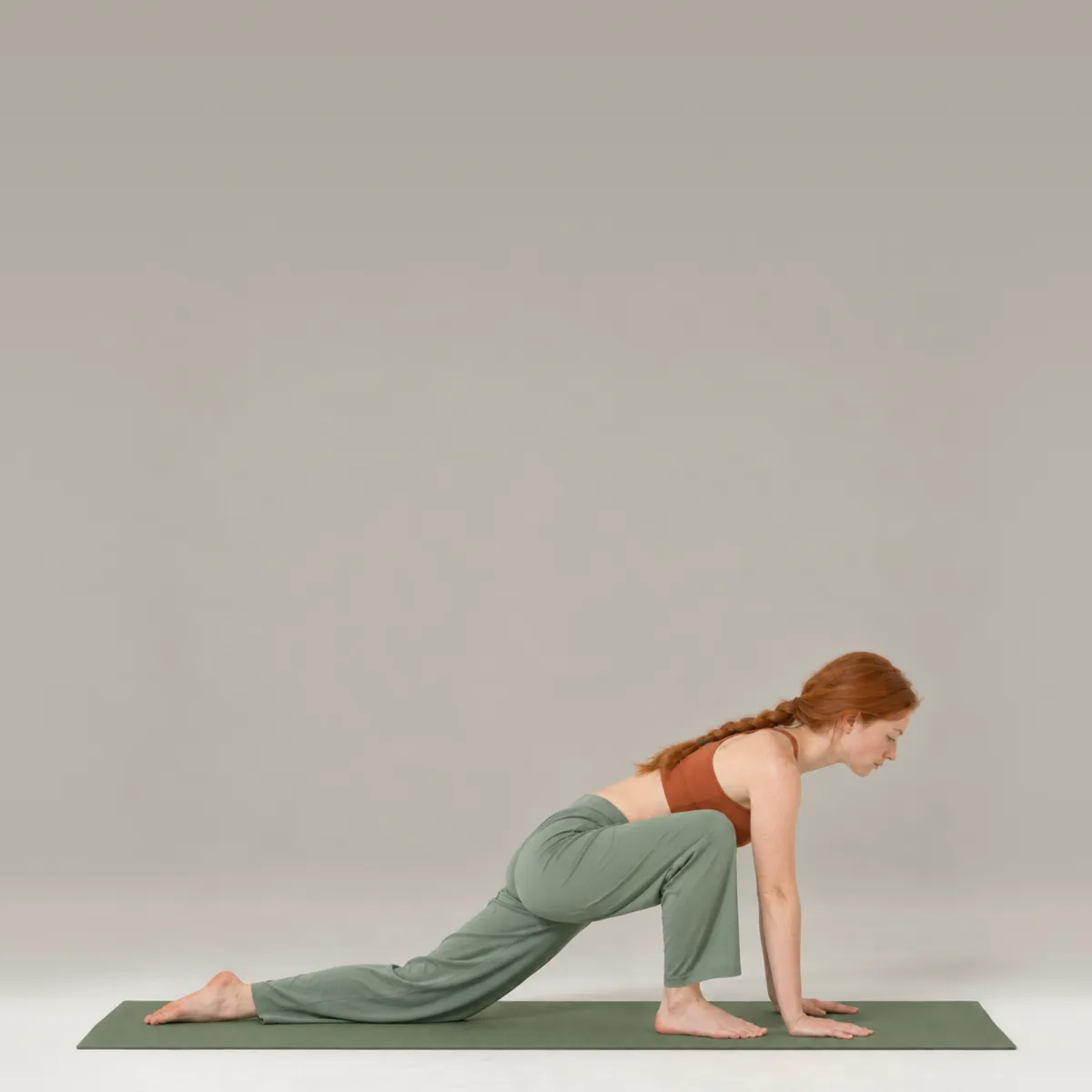
- Lizard pose, a deeper lunge for the front of the hip and the inner thigh.
- Pyramid pose, for the hamstrings, with a long spine and hands on blocks.
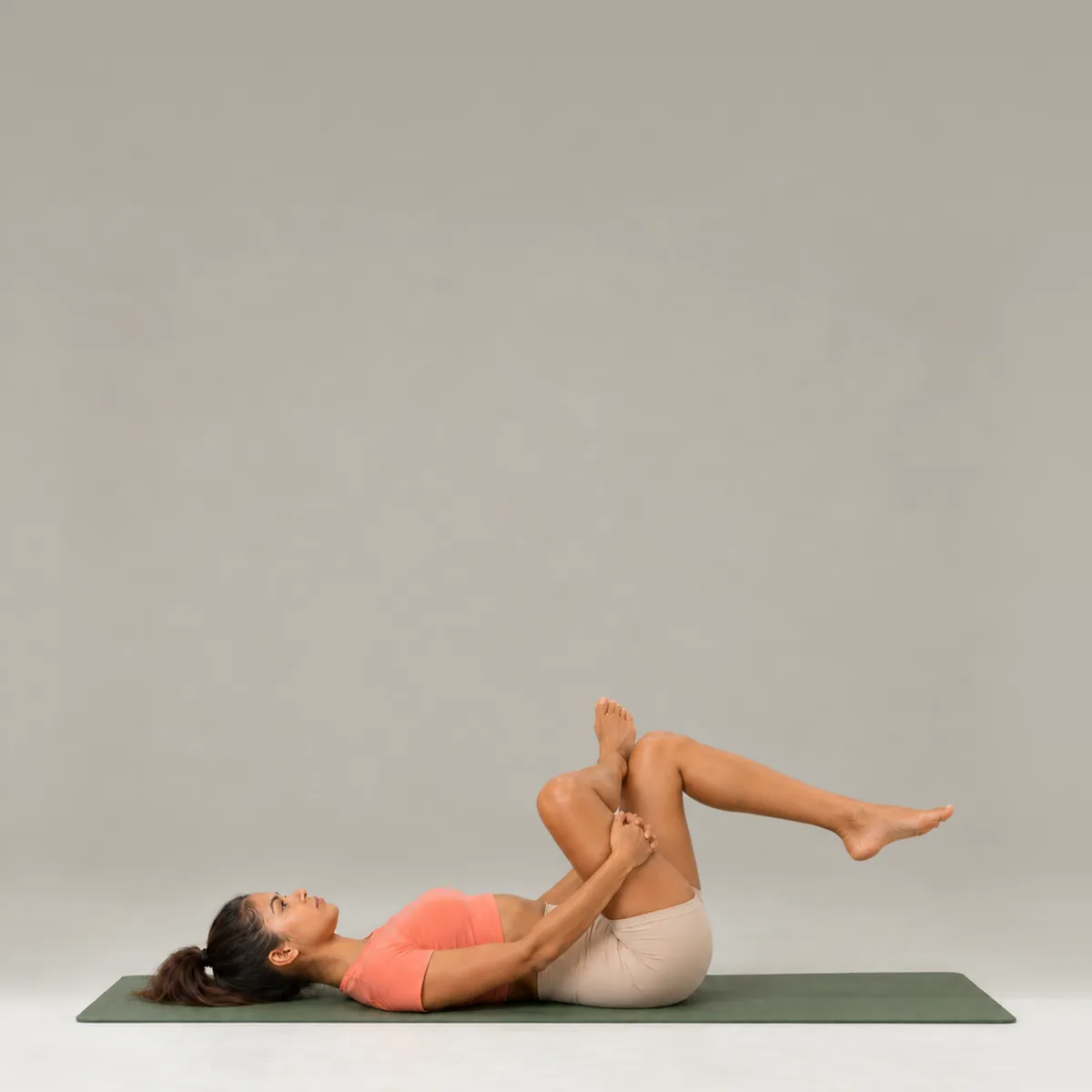
- Reclined figure four, a gentle way to reach the outer hip and glutes.
- Pigeon pose, a stronger outer hip stretch, with a folded blanket under the hip if needed.
- Supine twist, to rotate the spine after a run that kept it facing forward.
- Legs up the wall, a restful finish for tired legs.
Hold each shape for five to eight slow breaths, or about a minute for the floor poses. You are looking for a broad, manageable stretch, not the deepest version you can force.
A 15-minute sequence after a run
Start with a few rounds of downward dog, pedaling the feet. Step forward into low lunge on each side, then shift back into pyramid pose with your hands on blocks or a chair. Come down for lizard pose on each side, then roll onto your back for reclined figure four and a supine twist. Finish with three to five minutes of legs up the wall.
For a longer menu, the yoga poses for runners collection has step-by-step form guides for each pose.
When to practice
Gentle, longer holds tend to fit best after a run or on easy days, when your muscles are warm and there is no hard session to save energy for. Before a run, keep it short and dynamic: a few lunges, some leg swings, and a downward dog or two are plenty. Long, deep stretching right before speed work is not what most runners want.
Two or three sessions a week of 15 to 20 minutes is a realistic target. Consistency matters more than length here, just as it does in your training.
Do not skip strength and balance
Mobility is only half of what yoga offers runners. Single-leg balances such as tree pose and warrior III train the small muscles of the foot and hip that steady every stride. Bridge pose and plank build strength through the glutes and trunk. A session that includes a little of both often leaves the legs feeling more supported, not just looser.
Where feedback helps
Runners tend to push. That habit is useful on a hill and less useful in a hip stretch, where forcing range usually means the lower back or knee starts doing the work. In low lunge, the front knee often drifts past the ankle. In pyramid pose, the spine rounds to bring the chest lower.
Kova uses on-device pose tracking on your iPhone or iPad to notice visible patterns like these and gives a calm spoken cue while you hold the pose, such as easing the front knee back or lengthening the spine. A live form score shows how each pose is going, and your camera feed never leaves your device. Learn more about how real-time form correction works.
If you are managing a running injury, or a stretch causes sharp, pinching, or radiating pain, stop and check with a clinician or physiotherapist before continuing.
Running teaches your legs to repeat. Yoga reminds them they can do more.
Questions this guide answers
Is yoga good for runners?
Many runners find yoga helpful for hip and hamstring mobility, balance, and recovery days. It works best as a complement to running, with two or three short sessions a week.
Should runners do yoga before or after running?
Longer holds usually fit best after a run or on rest days. Before a run, keep it short and dynamic, such as a few lunges and a couple of rounds of downward dog.
What is the best yoga pose for runners?
There is no single best pose, but low lunge for the hip flexors and downward dog for the calves and hamstrings are good places to start.
A coach that sees you move.
Pre-order Kova on the App Store. It downloads automatically on release day, and your first practice is free.