Yoga · Intermediate
Pigeon pose
Eka Pada Rajakapotasana
Also called Pigeon prep, Sleeping pigeon
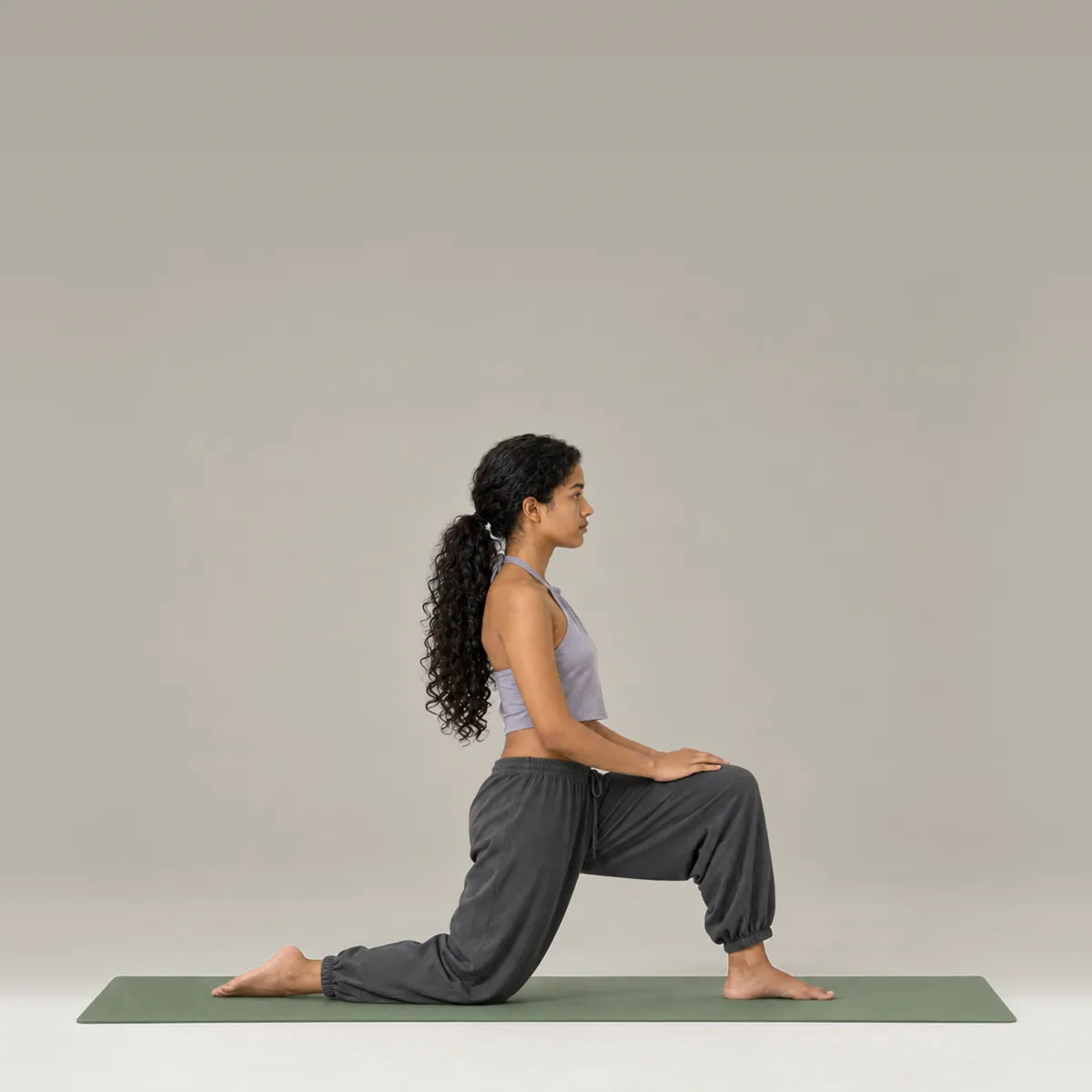
Pigeon pose is a deep hip opener, and most classes teach a prep version with the front shin on the mat and the back leg stretched long behind you. It targets the outer hip of the front leg and the front of the hip on the back leg. Form matters because the front knee can take strain when the hips are tight, so props and a level pelvis make the pose safer.
How to do Pigeon pose
- 1Start in downward dog or on hands and knees.
- 2Bring your right knee forward and place it behind your right wrist, with your right shin angled across the mat.
- 3Slide your left leg straight back, with the top of the foot resting on the mat.
- 4Flex your right foot and check that your hips face the front of the mat.
- 5Place a block or folded blanket under your right hip if it does not reach the floor.
- 6Stay upright on your hands, or walk your hands forward and fold over your front shin if your hips allow.
- 7Hold for five to ten breaths, then press back to hands and knees and switch sides.
Common mistakes and how to fix them
The hips tilt and the body sinks onto the front hip.
Slide a block or folded blanket under your front hip so your pelvis stays level and your weight is shared.
The front knee feels twisted or painful.
Bring your front heel closer to your body so the shin angle is smaller, flex the front foot, and back off if the knee still hurts.
The back leg angles out to the side.
Line up your back leg straight behind your hip, with the kneecap and top of the foot facing down.
The torso folds forward before the hips settle.
Stay upright on your hands until your hips feel steady, then lengthen your spine before you fold.
Modifications
- Use a block or folded blanket under the front hip for support.
- Practice figure four on your back, with one ankle crossed over the opposite thigh, if kneeling pigeon strains your knee.
- Keep your torso upright on your hands or on blocks instead of folding forward.
- Rest your forehead on stacked fists or a block when you fold.
Benefits
- Stretches the outer hip and glute of the front leg.
- Opens the front of the hip on the back leg.
- Offers a deep stretch for hips that feel tight after long days of sitting.
- Encourages slow breathing during a longer hold.
Breath
Breathe slowly through the nose and let each exhale soften the hips a little. If your breath turns short, lift your torso or add more support.
Take care
Take care with knee or hip injuries, and choose figure four on your back if the front knee feels strained. Stop if you feel sharp pain, especially in the knee.
Pigeon pose questions
Why does pigeon pose hurt my knee?
When the hips are tight, the twist can end up in the knee instead. Bring your front heel closer to your body, flex the front foot, support the hip with a block, or try figure four on your back.
What is the difference between pigeon pose and pigeon prep?
Pigeon prep is the hip opener most classes teach, with the front shin down and the back leg long. The full pose, Eka Pada Rajakapotasana, adds a deep backbend and a reach back for the back foot.
How long should I hold pigeon pose?
Start with five to ten breaths on each side. In slower classes, holds of one to two minutes are common if the hip stays supported and the knee feels fine.