Can't touch your toes? What it means and how to get there

Not reaching your toes is not a flaw. It is information about your hamstrings, your hips, and how you fold. Here is what to do with it.
Plenty of people stop at their shins in a forward fold and quietly decide they are "not flexible." That label tends to stick, and it keeps a lot of people away from yoga altogether. It does not need to.
Reaching your toes is not a test of fitness, and it is not a requirement for practice. It is one small piece of information about how your hamstrings, hips, and spine share the work of folding. Once you understand that, the path toward your toes gets much clearer, and much gentler.
What is actually stopping you
A standing forward fold asks several areas to lengthen at once: the hamstrings along the back of the thighs, the calves, the muscles around the hips, and the back. When one of them is not ready to give, the others try to make up the difference. Most often, the hamstrings run out of length first, and the lower back rounds to keep reaching.
Other factors play a part too. Long hours of sitting, a lot of running or cycling, the proportions of your arms, legs, and torso, and even the time of day can change how far you reach. Some people simply have more range than others. Your toes are a useful landmark, not a finish line.
Fold from the hips, not the waist
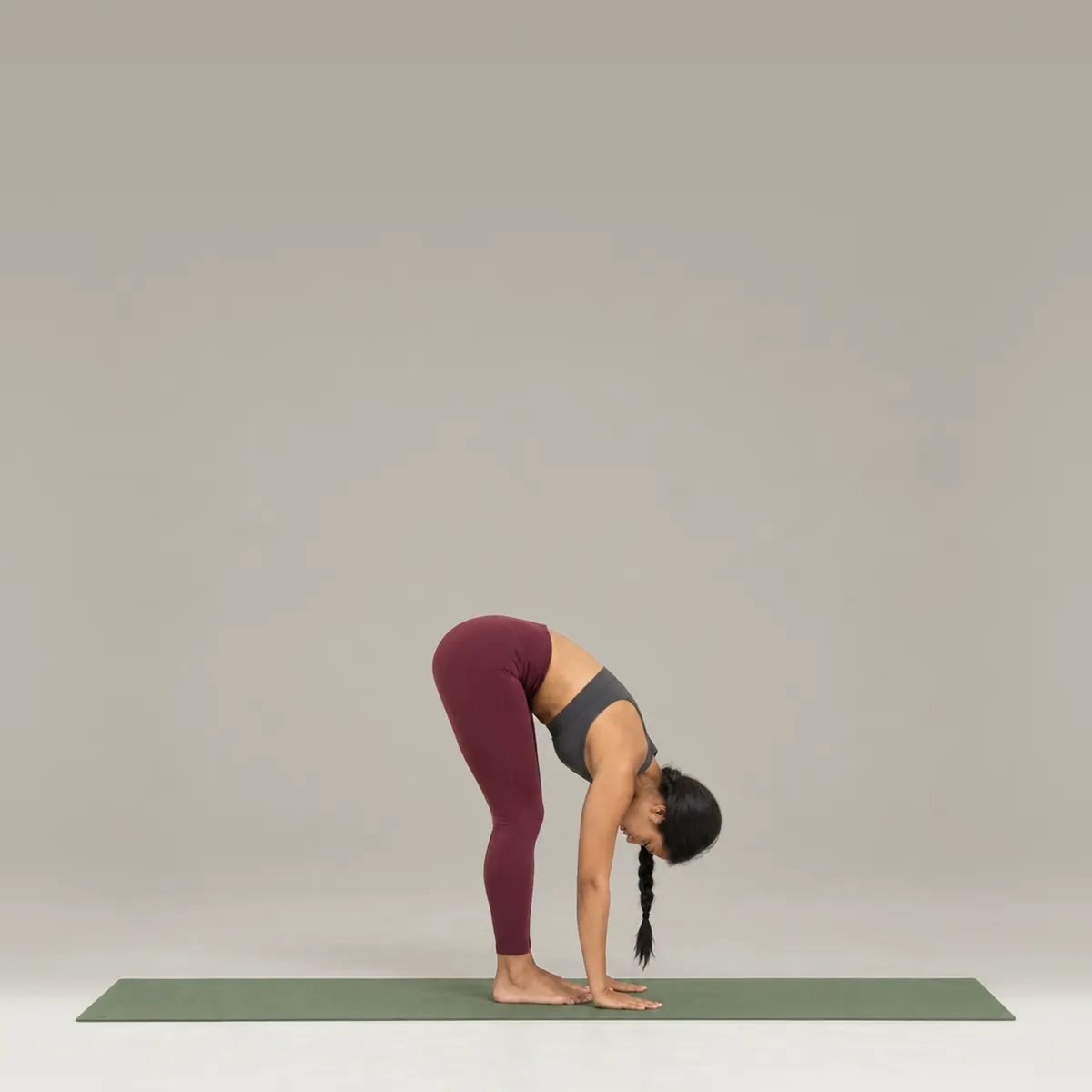
The most helpful change is usually not stretching harder. It is learning to hinge. A hip hinge means the pelvis tips forward as you fold, like a bowl pouring water out of the front, while the spine stays long. Rounding from the waist can feel like progress, but it moves the stretch away from the hamstrings and into the lower back.
- Stand with your feet hip-width apart and your knees soft.
- Place your hands on your hips and send them back as you fold, as if closing a drawer behind you.
- Keep your chest long and pause the moment your back starts to round.
- Bend your knees as much as you need, then let your hands rest on your shins, a block, or the floor.
That last point matters. Bent knees are not cheating. In a standing forward fold, bending the knees lets the pelvis tip forward so the hamstrings can lengthen from the right end. Many people find they reach the floor sooner with bent knees than they ever did straining with straight legs.
Poses that help you get there
Rather than repeating the same fold, use a few shapes that lengthen the back of the legs from different angles. Hold each for five to eight slow breaths, two or three times a week.
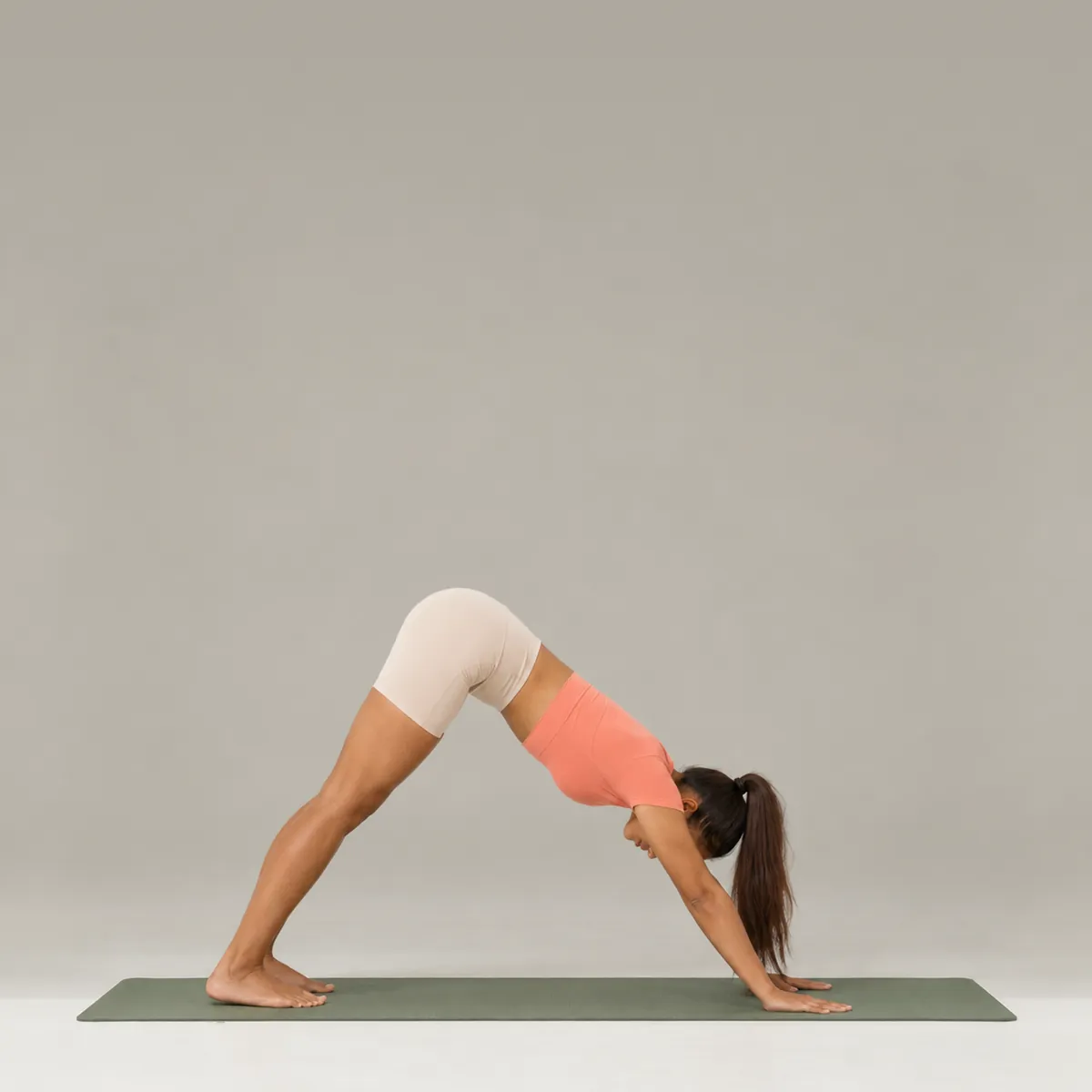
- Downward facing dog with bent knees, pedaling the heels one at a time.
- Pyramid pose, with your hands on blocks so the spine can stay long.
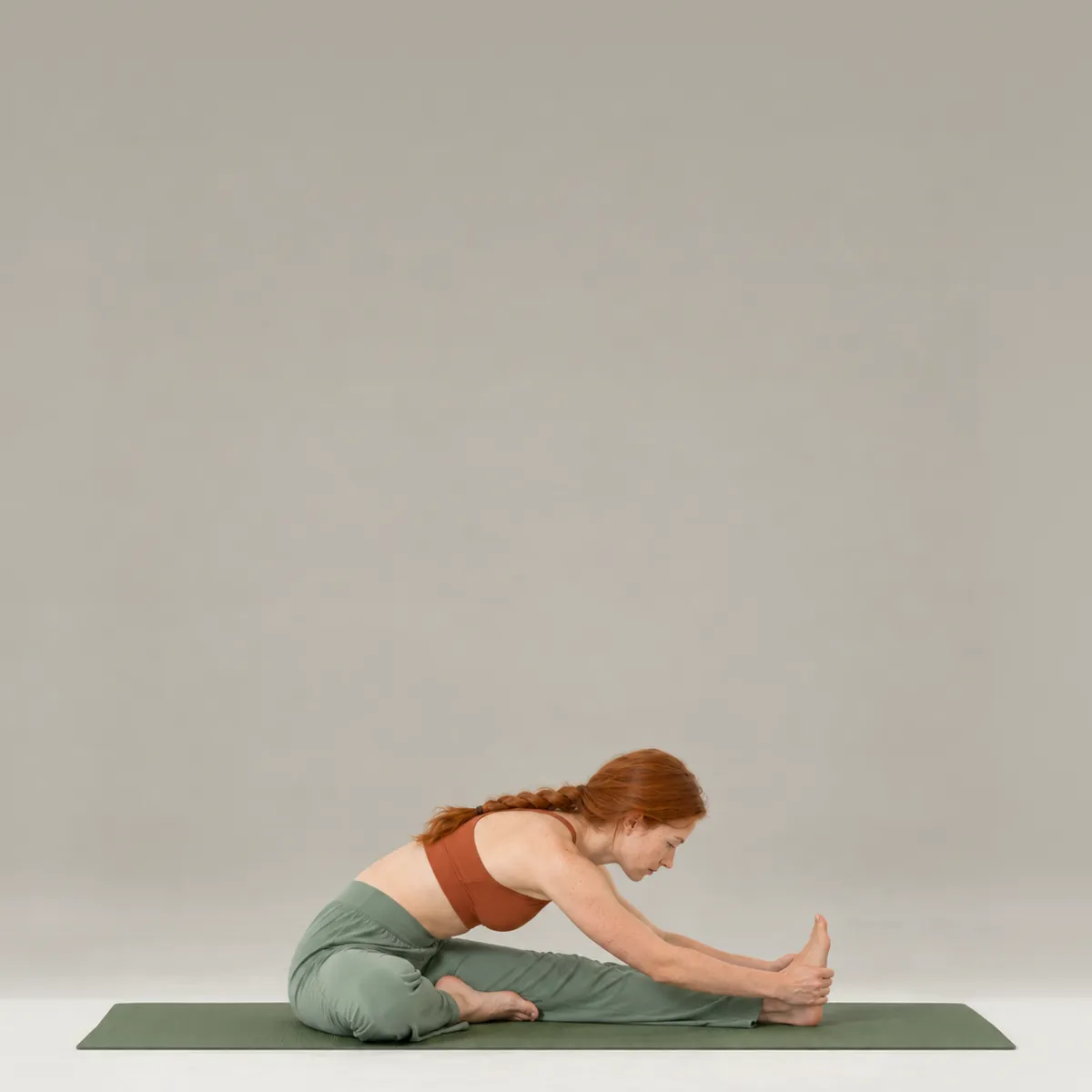
- Seated forward fold, sitting on a folded blanket so the pelvis can tip forward.
- Head-to-knee pose, which works one leg at a time.
- Low lunge into a half split, shifting the hips back over the back knee.
For a fuller list, the hamstring pose collection explains what each shape is doing and how to set it up.
How long it takes
Flexibility changes slowly, and that is normal. With a few short sessions each week, many people notice that folds feel easier within a few weeks, even if the distance to the floor changes less than they hoped. The feeling usually shifts first: less pulling, steadier breath, more ease getting into the shape.
Consistency beats intensity here. Forcing a deep stretch once a week tends to make the body guard. Gentle, frequent practice tends to let it relax. If you want a structured approach, a 30-day flexibility plan can help you build range gradually.
When to be cautious
A stretch should feel broad and manageable, usually through the middle of the muscle. Stop and check with a clinician if you feel sharp pain, pain behind the knee, or numbness or tingling down the leg, or if you are managing a back injury or are pregnant. Those are signs to change the plan, not to push through.
Where Kova helps
The hardest part of a forward fold is that you cannot see your own back. Rounding from the waist feels much the same as hinging from the hips when your head is upside down. Kova uses on-device pose tracking to notice when your spine starts to round or your knees lock, then offers a single spoken cue, such as bend your knees or lead with your chest, while you are still in the pose. If a cue is unclear, a "Not sure?" demo shows you the shape. Your camera feed never leaves your device.
Touching your toes is not the goal. Folding well is, and your toes tend to follow.
Questions this guide answers
Why can't I touch my toes?
Usually because the hamstrings run out of length and the lower back rounds instead of the hips hinging. Sitting habits, other training, and body proportions also play a part.
How long does it take to be able to touch your toes?
It varies. Many people feel folds getting easier within a few weeks of short, regular practice, but full range can take months. Gentle consistency works better than forcing.
Is it bad if I can't touch my toes?
No. It is very common and is not a measure of fitness or health. Yoga works with whatever range you have, and bent knees or blocks make every fold accessible.
A coach that sees you move.
Pre-order Kova on the App Store. It downloads automatically on release day, and your first practice is free.