How to get more flexible with yoga: a 30-day plan

Flexibility is trained, not inherited. Here is a calm, week-by-week plan for your first month, and what to honestly expect.
Most people who say they are not flexible enough for yoga have the order backwards. Flexibility is one of the things yoga trains, and like any kind of training it responds to regular, patient practice far better than to occasional big efforts.
This plan gives you a realistic first month: how often to practice, how long to hold each stretch, which poses to focus on, and what kind of change you can reasonably expect by day thirty.
What to expect in 30 days
Be honest with yourself about the timeline. In the first couple of weeks, much of what feels like new range is your nervous system becoming more comfortable with a position. That is real progress, and it is often the part people notice first: a forward fold that feels less alarming, or hips that settle more easily in a lunge.
Deeper, longer-lasting change usually takes more than a month. Thirty days is enough to build the habit, learn the shapes well, and feel a clear difference. It is not usually enough to go from far off your toes to palms flat on the floor, and that is fine. For a broader look at timelines, see how long yoga results usually take.
Three rules that make flexibility work
- Frequency beats intensity. Five short sessions a week will do more than one long, forceful one.
- Hold long enough to settle. Thirty seconds to a minute per stretch, or five to ten slow breaths, gives the body time to stop guarding.
- Stay at a mild, broad stretch. If the sensation turns sharp or pinching, or makes you hold your breath, back off until it eases.
The third rule matters most. Forcing a stretch tends to make the body protect itself, which works against the range you are trying to build. Steady breathing is the best sign you are in the right zone, and breath is the most honest feedback you have.
Your core poses
You do not need a long list. These poses cover the areas most people feel tight in: the backs of the legs, the hips, and the spine.
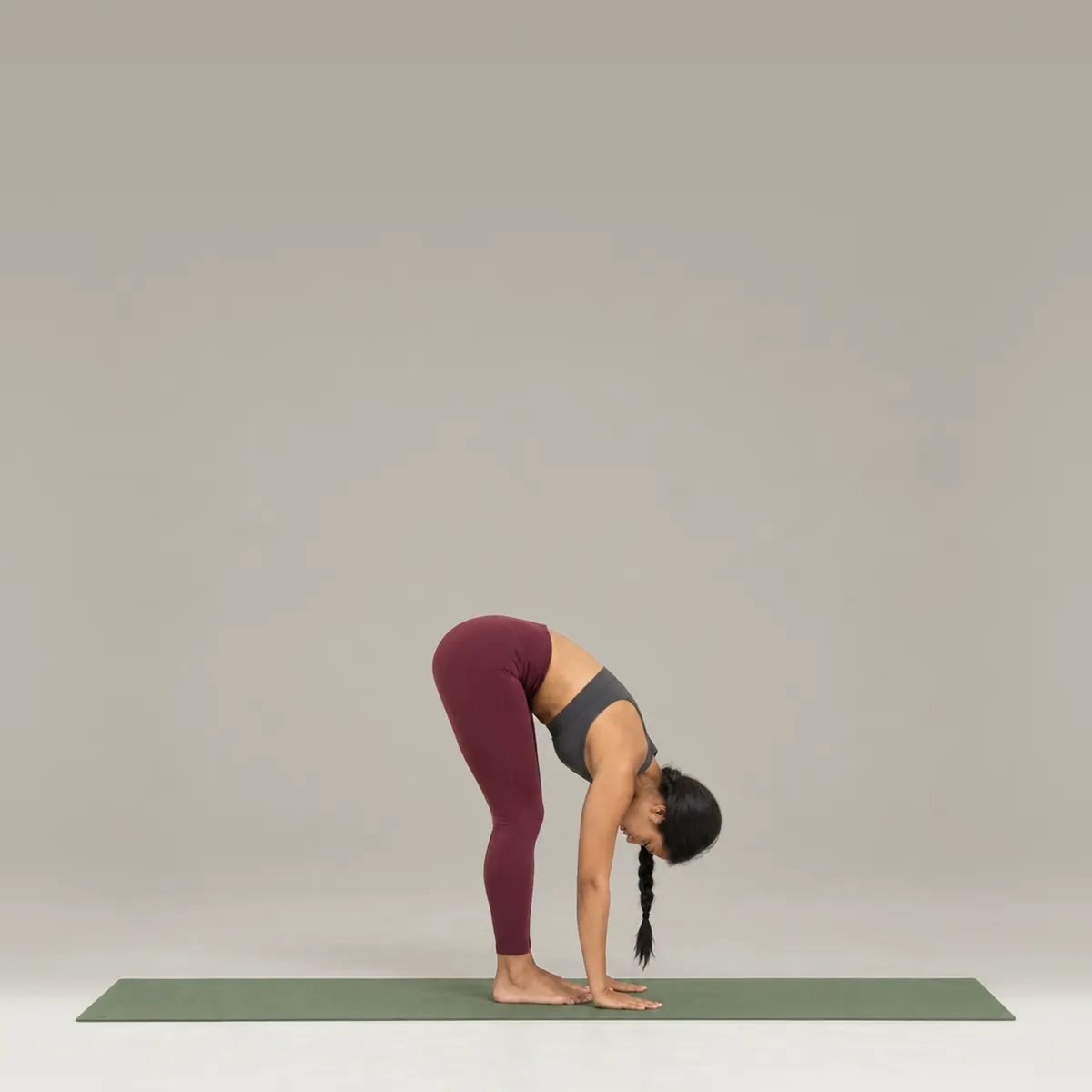
- Standing forward fold with bent knees, for the hamstrings and lower back.
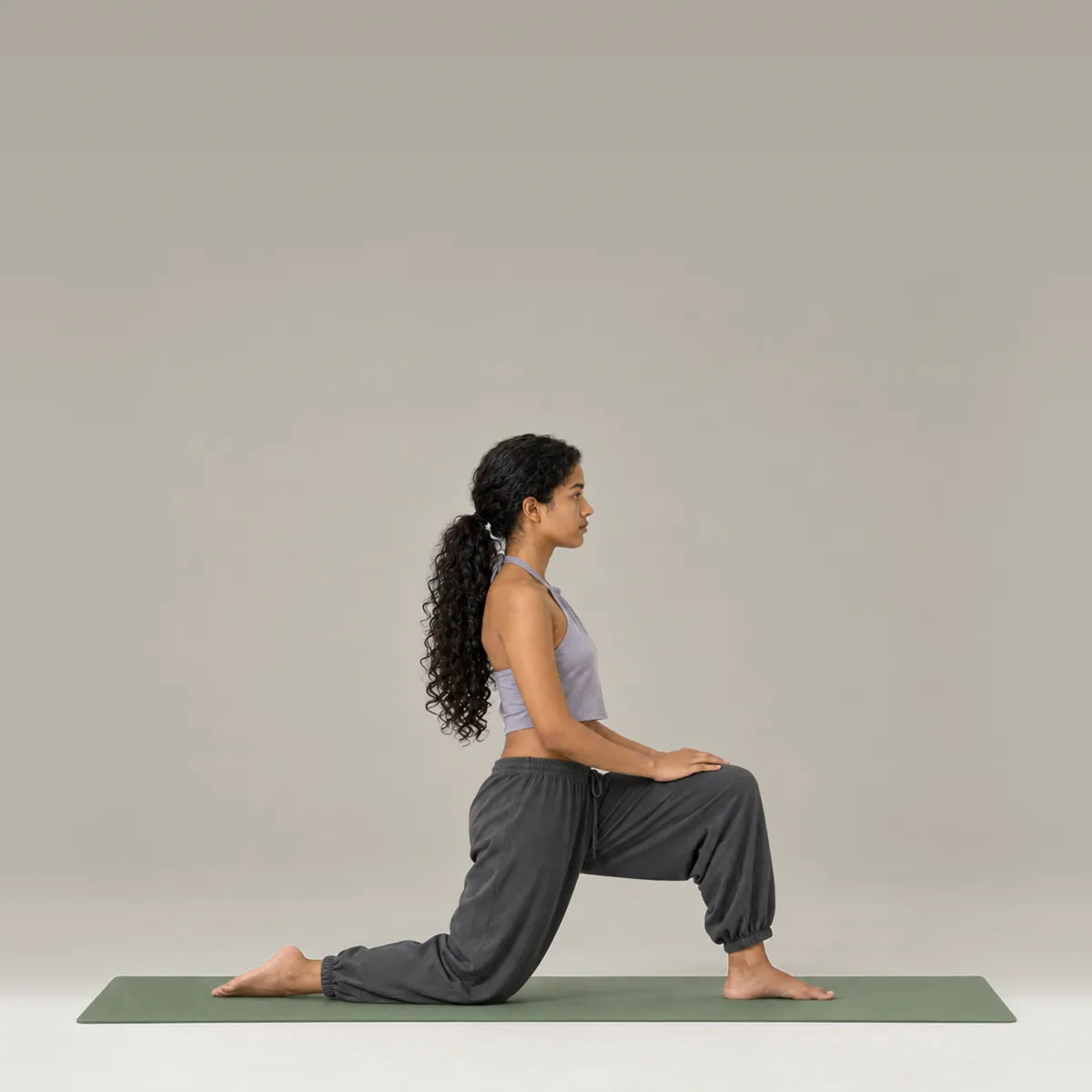
- Low lunge, for the front of the hips after sitting.
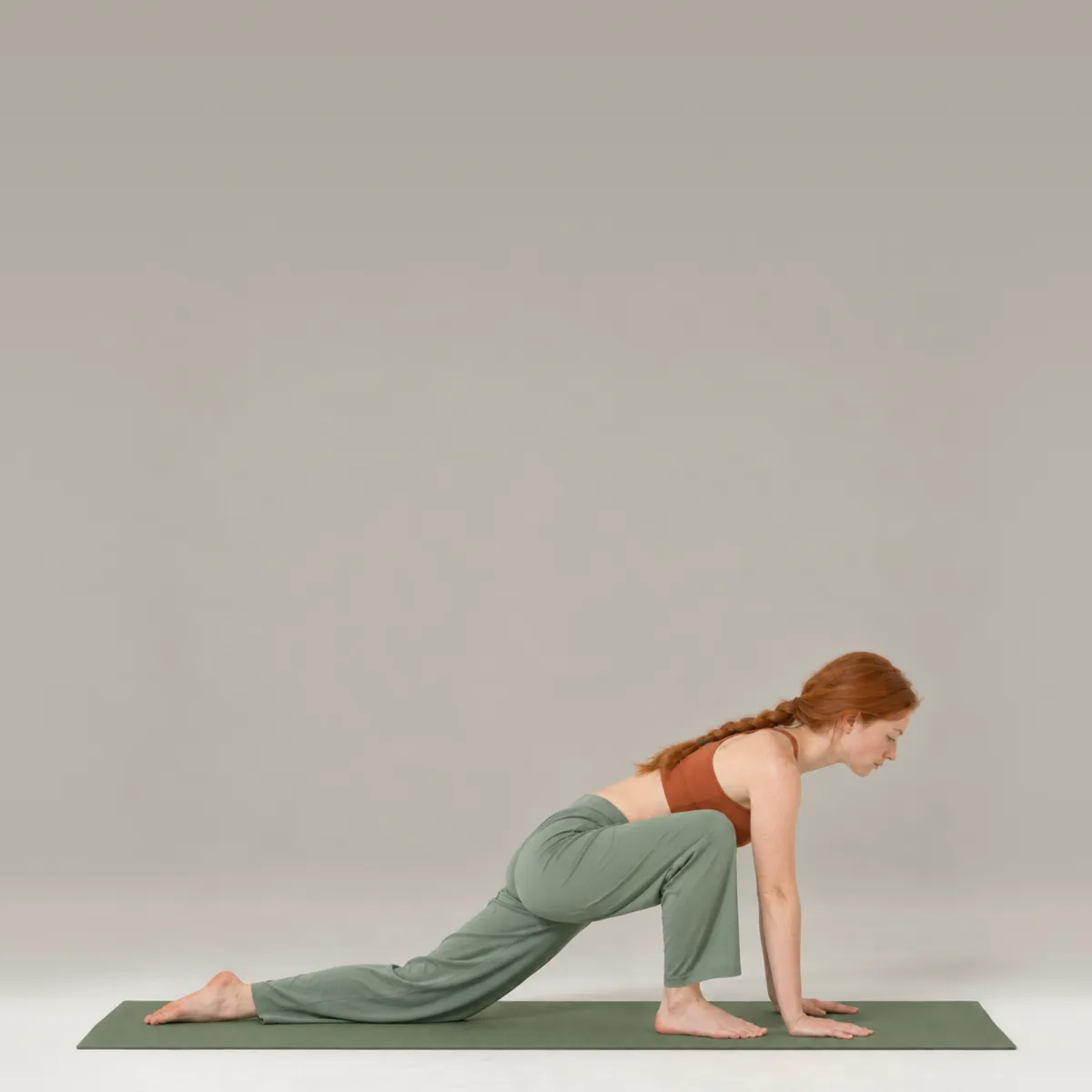
- Lizard pose, for deeper hip opening once low lunge feels easy.
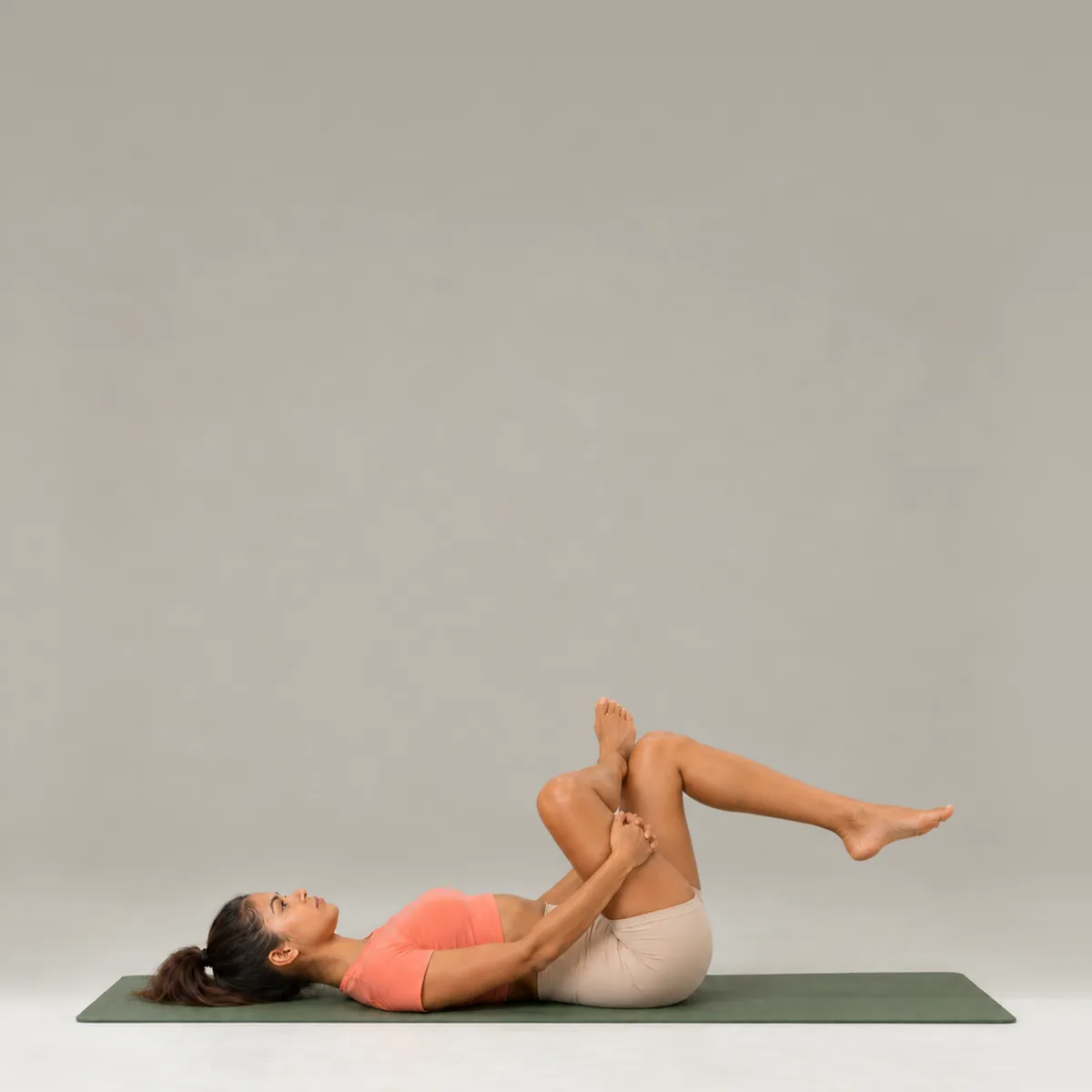
- Reclined figure four, for the outer hips without strain on the knee.
- Butterfly pose, for the inner thighs.
- Supine twist, for the spine and the sides of the body.
- Child's pose, to rest between holds.
If you want more options for a particular area, the flexibility collection gathers the most useful poses with form guides for each one.
The 30-day plan, week by week
- Week one: four sessions of 10 minutes. Learn each pose at a gentle range and hold for five slow breaths.
- Week two: five sessions of 10 to 15 minutes. Hold each stretch for 30 seconds and add a short warm-up of cat-cow first.
- Week three: five sessions of 15 minutes. Hold for 45 seconds to a minute, and add pyramid pose for the hamstrings.
- Week four: five sessions, one of them 20 to 25 minutes. Repeat the full sequence and notice where it feels easier than it did on day one.
Always warm up before holding longer stretches. A few minutes of cat-cow, gentle lunges, or a short walk makes the body more willing to lengthen. Cold, forced stretching is where most people get frustrated or sore.
How to track progress without forcing it
Pick one or two reference points and check them once a week, not every day. Where your fingertips land in a forward fold, or how comfortably your back knee settles in a lunge, are simple markers. Daily checks tend to turn into daily pushing.
Notice the quieter signs too: getting out of a chair more easily, less stiffness in the morning, a lunge you can breathe in. Those often show up before any measurable change in range.
If you have an injury, joint hypermobility, or are pregnant, check with a clinician before working on range, and skip anything that causes sharp or radiating pain.
Where Kova helps
The biggest risk with flexibility work at home is chasing depth with poor form: rounding the back to reach the floor, or letting the front knee drift in a lunge. Kova uses on-device pose tracking to notice visible changes in alignment like these and gives a calm spoken cue while you hold the stretch. A live form score shows how each pose is going.
Kova also remembers how your sessions felt, so a tight or tender day leads to a gentler next one instead of a plan that pretends nothing happened. Your camera feed never leaves your device, and every session works in audio-only mode if you prefer.
Flexibility is not something you take from the body. It is something the body gives you when it feels safe.
Questions this guide answers
How long does it take to get flexible with yoga?
Many people feel a difference within two to four weeks of regular practice, mostly as poses feeling easier. Larger changes in range usually take a few months of consistent work.
How often should I stretch to improve flexibility?
Short sessions four to five times a week tend to work better than one long session. Hold each stretch for about 30 seconds to a minute at a mild, steady intensity.
Can you become more flexible at any age?
Most people can improve their range at any age with regular, gentle practice. Progress may be slower, so start with a comfortable range and check with a clinician if you have joint or health concerns.
A coach that sees you move.
Pre-order Kova on the App Store. It downloads automatically on release day, and your first practice is free.