Yoga props at home: what to use instead of blocks, straps, and bolsters

You do not need to buy a kit to practice with support. Books, belts, pillows, and a wall can do most of the work.
Props have an image problem. They can look like accessories for advanced students, or like something you use because you cannot do the real pose. In practice, the opposite is closer to true. Props bring the floor closer, extend your reach, and let you find good alignment before your body has the range to do it alone.
The good news is that most homes already have what you need. Here is what each common prop does, what to use instead, and how to make sure your swaps are safe.
Blocks: books, sturdy boxes, or a step
A yoga block raises the floor. In poses like triangle, half moon, or low lunge, it lets you keep a long spine instead of rounding down to reach the ground.
Two or three thick hardback books, stacked and held together with a rubber band, work well. A sturdy box or the bottom step of a staircase can also do the job. Whatever you use needs to be stable and must not slide on your floor. Avoid anything that could tip, roll, or crush under your weight, and never use glass or furniture on wheels.
Straps: a belt, a scarf, or a towel
A strap extends your arms. It is most useful in seated and reclined stretches for the backs of the legs, such as seated forward fold, where it lets you keep the spine long and the shoulders relaxed instead of straining to grab your feet.
A long belt, a sturdy scarf, a bath towel, or the tie from a dressing gown all work. Choose something without much stretch, and keep buckles away from your face. Hold the strap loosely. It is there to support the pose, not to pull you deeper.
Bolsters and blankets: pillows, cushions, and towels
Bolsters are for comfort and support, especially in restful poses. A firm sofa cushion or two stacked bed pillows can go under your chest in child's pose, under your knees when you lie on your back, or lengthwise under your spine for a gentle chest opener.
A folded blanket or bath towel is one of the most useful props there is. Put it under your knees in tabletop or lunges, or sit on its edge in seated poses so your hips are slightly higher than your knees. That small lift often makes a forward fold or a cross-legged seat far more comfortable.
The wall and the chair
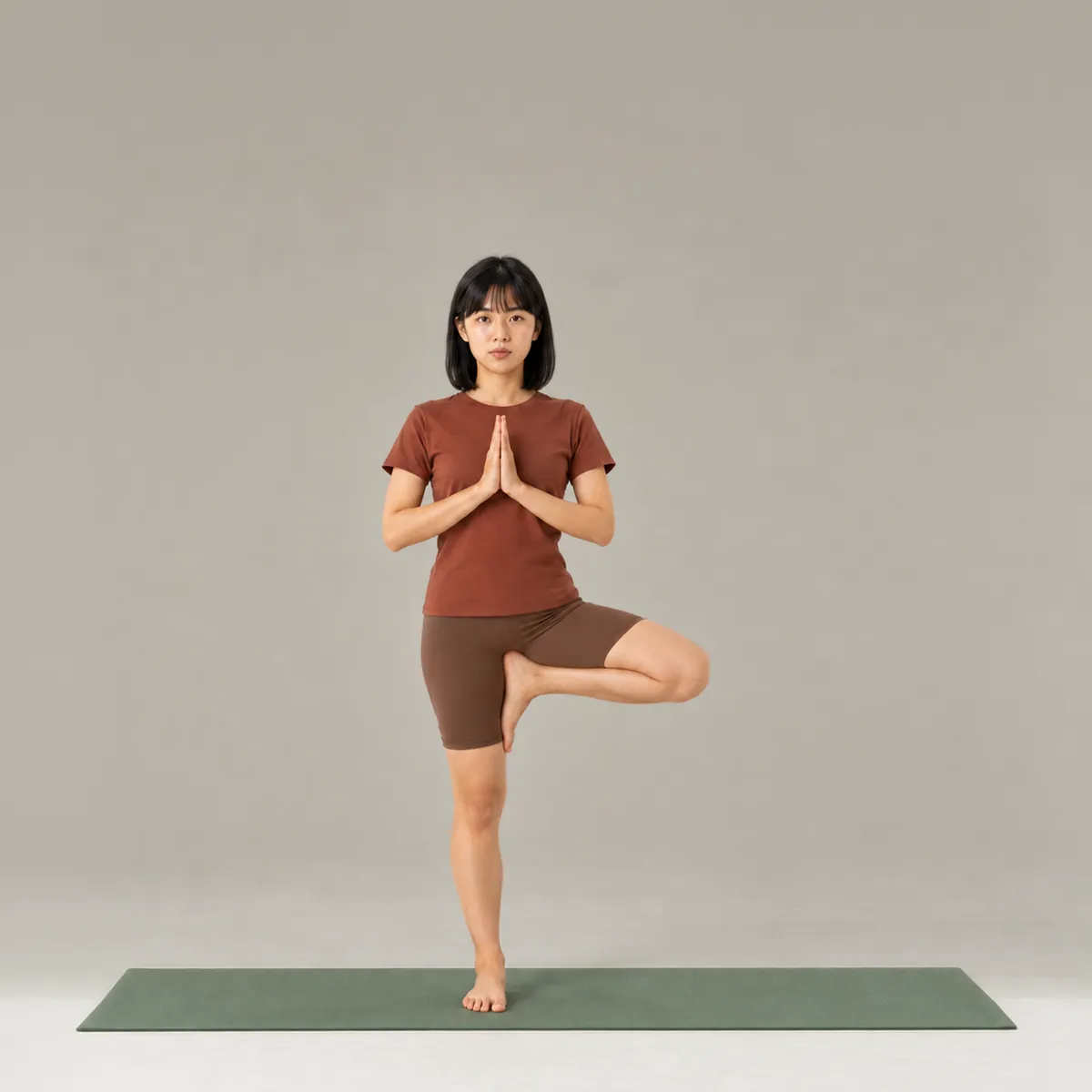
A clear stretch of wall is a free and very reliable prop. Use it for balance in tree pose, to check alignment in standing poses, or for legs up the wall at the end of a session. Wall pilates builds whole routines around the same idea.
A sturdy chair without wheels can steady you in standing balances or let you practice seated versions of many poses. Push it against a wall first so it cannot slide away from you.
Safety checks for household swaps
- Test it first. Press down on your swap with your hands before you put body weight on it.
- Check the floor. Anything that slides on wood or tile needs a mat or rug underneath.
- Keep it firm. Soft props can collapse in standing poses, so save cushions for floor work.
- Clear the space. Move sharp corners, glass, and anything fragile out of reach of your arms and legs.
- Use props to reduce strain, not to force more range. If a pose still feels sharp or pinching with support, come out of it.
If you have an injury or a joint condition, or are pregnant, a clinician or an experienced teacher can help you choose the right supports for your body.
Where Kova helps
Props help most when they go where the body needs them. A block under your hand is only useful if your spine stays long, and a cushion under your hips only helps if your knees are not straining. Kova uses on-device pose tracking to notice visible alignment, like a rounding back or a drifting knee, and gives calm spoken cues while you hold the pose.
Props are optional in Kova. The intake asks which props you have at home, so your plan can include them where they help. And a cue about a rounding back is often a good sign that bringing the floor closer with a block would help. Your camera feed never leaves your device.
A prop is not a shortcut. It is a way to meet the pose where your body is today.
Questions this guide answers
What can I use instead of a yoga block?
Two or three stacked hardback books, a sturdy box, or the bottom step of a staircase can stand in for a block. Make sure it is stable and will not slide or tip under your weight.
What can I use instead of a yoga strap?
A belt, a scarf, a towel, or a dressing gown tie all work. Choose something with little stretch and hold it loosely rather than pulling yourself deeper.
Do beginners need yoga props?
They are not required, but they help. Props make many poses more comfortable and easier to align, which is especially useful while you are still building flexibility and strength.
A coach that sees you move.
Pre-order Kova on the App Store. It downloads automatically on release day, and your first practice is free.