How to start yoga at home when you have never done it

You don't need flexibility, a studio, or a perfect morning. You need a mat, a plan, and a way to know you're on track.
Most people who want to start yoga at home do not have a motivation problem. They have a starting problem. Which video? How long? Is this pose supposed to feel like this? By the time those questions are answered, the window for practice has often closed.
This guide gives you a simple way through: what you actually need, what to practice first, how to shape your first four weeks, and how to tell whether your form is working when nobody else is in the room.
What you actually need
Less than you think. A mat with some grip, enough floor space to lie down with your arms overhead, and clothes you can move in. A folded blanket can soften your knees. Two thick books can stand in for yoga blocks. A belt or scarf works as a strap.
What you do not need is flexibility. Flexibility is something practice builds, not an entry requirement. If you cannot touch your toes, you are exactly the person beginner yoga is designed for.
The first poses worth learning
Beginners do best with a small set of foundational shapes repeated often, rather than a long flow seen once. These six show up in almost every style of practice, so time spent learning them pays off everywhere.
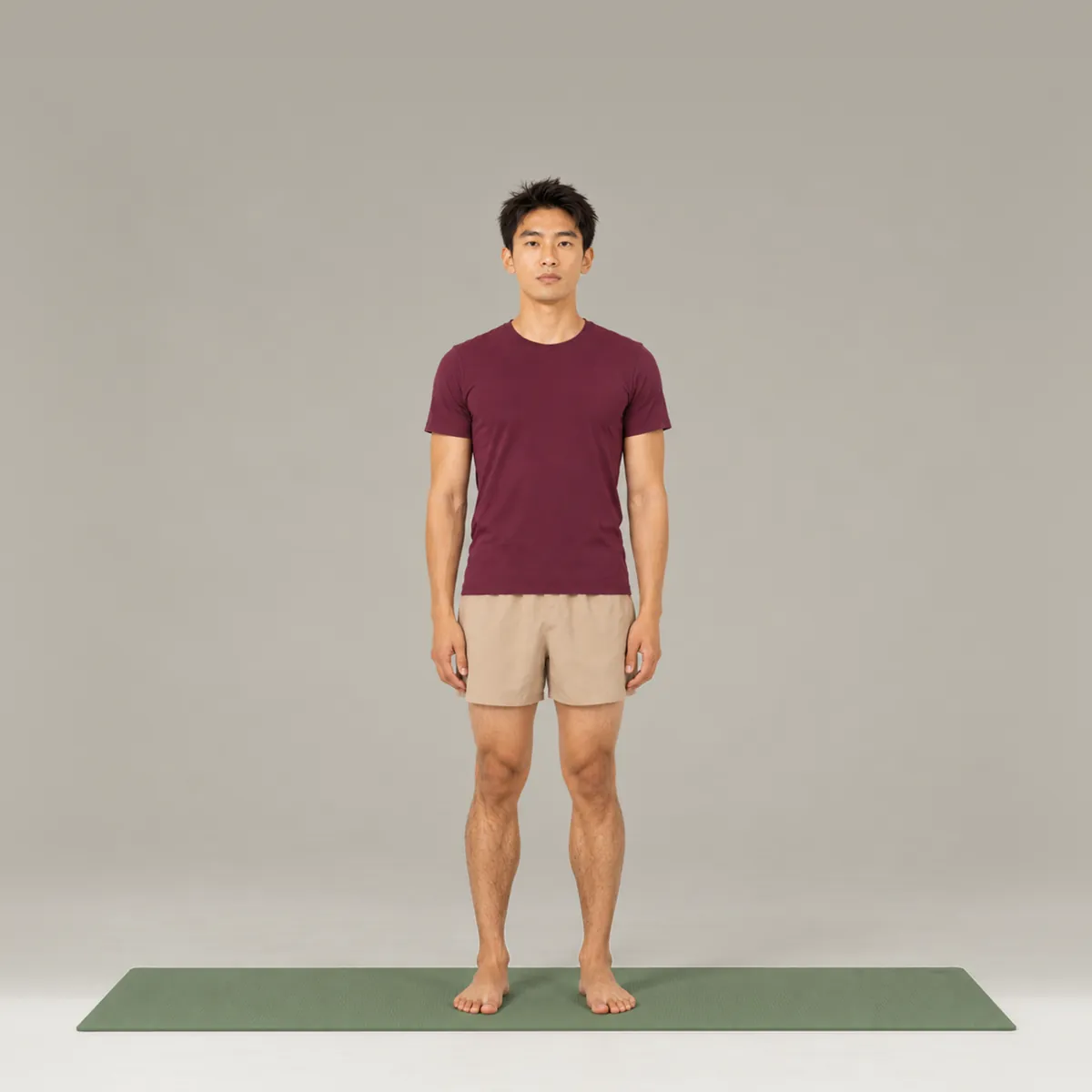
- Mountain pose, to learn what standing evenly on both feet feels like.
- Cat and cow, to wake up the spine and link movement to breath.
- Downward facing dog, with bent knees for as long as you need them.
- Low lunge, to open the front of the hips after sitting.
- Child's pose, as your rest position whenever you need it.
- Bridge pose, to build strength through the back of the body.
Spend a few slow breaths in each. The goal in week one is not depth. It is learning where your feet, hands, hips, and breath belong.
A simple four-week starter plan
- Week one: three sessions of 10 to 15 minutes, foundations only.
- Week two: three sessions of 15 minutes, adding one standing pose such as warrior II.
- Week three: three or four sessions, linking poses into a short flow with breath.
- Week four: four sessions, one of them 25 to 30 minutes and the rest short.
Notice the shape of that plan. It grows slowly, keeps sessions short, and protects the habit before it asks for more time. Short sessions you finish build more than long sessions you dread.
The hard part: knowing if you are doing it right
This is where most home practice stalls. A video shows the shape, but it cannot see yours. You might be letting your knee drift past your ankle in a lunge, locking your elbows in downward dog, or holding your breath in every balance. None of those feel obviously wrong in the moment, and all of them make the practice harder than it needs to be.
A few self-checks help. Can you breathe steadily? Is the sensation broad and manageable rather than sharp? Do both sides of your body feel like they are participating? If the answer is no, make the pose smaller before trying to make it deeper.
Kova was built for this gap. Prop up your iPhone or iPad, and on-device pose tracking reads your alignment while you move, then offers a calm spoken cue at the moment it can still help. Your camera feed never leaves your device, and if you would rather not use the camera at all, every session also works in audio-only mode.
Make the habit easy to repeat
Pick a time you can actually protect, keep your mat somewhere visible, and decide the night before what you will practice. Fewer decisions mean fewer reasons to skip.
Start smaller than you think you should. Small is what you will repeat.
Questions this guide answers
Can I learn yoga at home without a teacher?
Yes. Many people start at home. Begin with foundational poses, move slowly, and use some form of feedback, such as a mirror or a coaching app, so you can check your alignment.
How long should a beginner yoga session be?
Ten to fifteen minutes is enough at the start. Consistency matters more than length, so begin with sessions you can repeat three times a week.
Do I need to be flexible to start yoga?
No. Flexibility develops with practice. Use bent knees, blocks, or a smaller range until the pose feels steady.
A coach that sees you move.
Pre-order Kova on the App Store. It downloads automatically on release day, and your first practice is free.