Wall pilates for beginners: what the trend gets right

Wall pilates is everywhere online. Here is what it actually is, a few exercises to try, and when a plain mat is enough.
Wall pilates has become one of the most searched workouts online, helped along by short videos of people pressing their feet into a wall and pulsing through bridges and leg lifts. It looks approachable, needs no equipment, and promises the benefits of pilates from home.
Some of that is genuinely useful. Some of it is marketing. This guide explains what wall pilates is, what the wall actually adds, a few beginner exercises to try, and when a plain mat practice gives you everything you need.
What wall pilates actually is
Wall pilates is mat pilates with a wall used as a prop. You lie on your back with your feet on the wall, stand with your back against it, or press your hands into it. The movements are mostly familiar: bridges, leg lifts, squats, roll-downs, and core work. The wall gives you something to push against and a reference point for alignment.
It is not a separate method. Studio pilates uses equipment such as the reformer, with springs and straps that add resistance and support. A wall at home borrows a small part of that idea: feedback and support from a surface that does not move.
What the wall gets right
- Feedback. Pressing your spine or feet into a wall makes it easier to feel whether you are staying aligned.
- Support. The wall can take some of the load, which helps beginners hold positions long enough to learn them.
- Resistance. Pushing into a fixed surface gives the legs and glutes something to work against without weights.
- Accessibility. You need a clear stretch of wall and a mat, nothing else.
Four wall exercises to try
Start with these, moving slowly and breathing steadily. Do five to eight controlled repetitions of each, and rest whenever your form starts to slip.
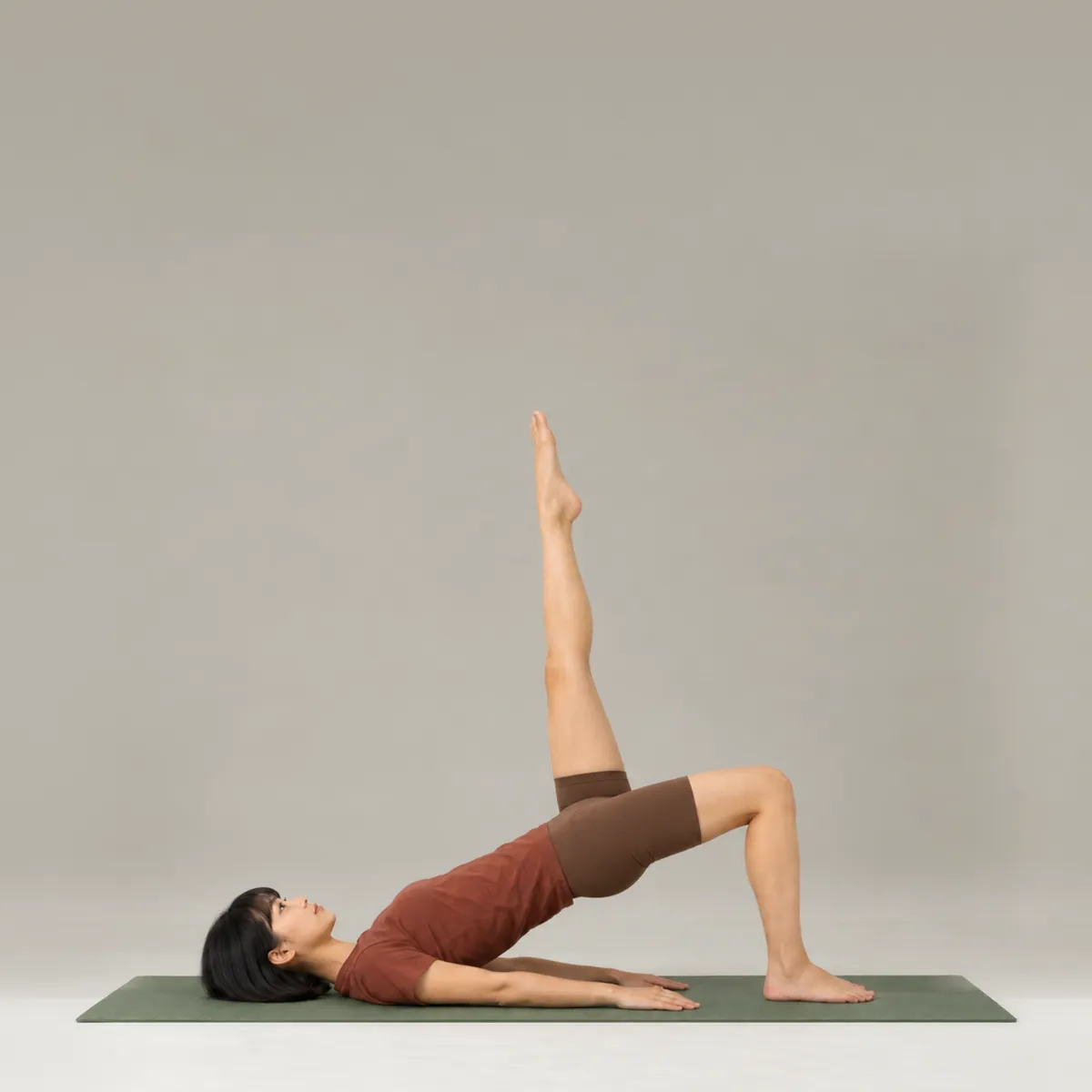
- Wall bridge: lie on your back with your feet flat on the wall, knees bent at roughly ninety degrees. Press through the feet and lift the hips, peeling the spine up one section at a time, then lower slowly. It is a variation of bridge pose.
- Wall roll-down: stand with your back against the wall and your feet a little in front of you. Nod the chin and roll down slowly, peeling the spine away from the wall, then roll back up. It prepares you for the mat roll-up.
- Wall sit with arm reach: slide down until your knees are bent and hold, keeping your lower back in contact with the wall while you reach your arms forward.
- Wall leg lifts: lie on your side with your back near the wall for reference and lift the top leg, keeping the hips stacked. It is a supported version of side kick.
When a mat is enough
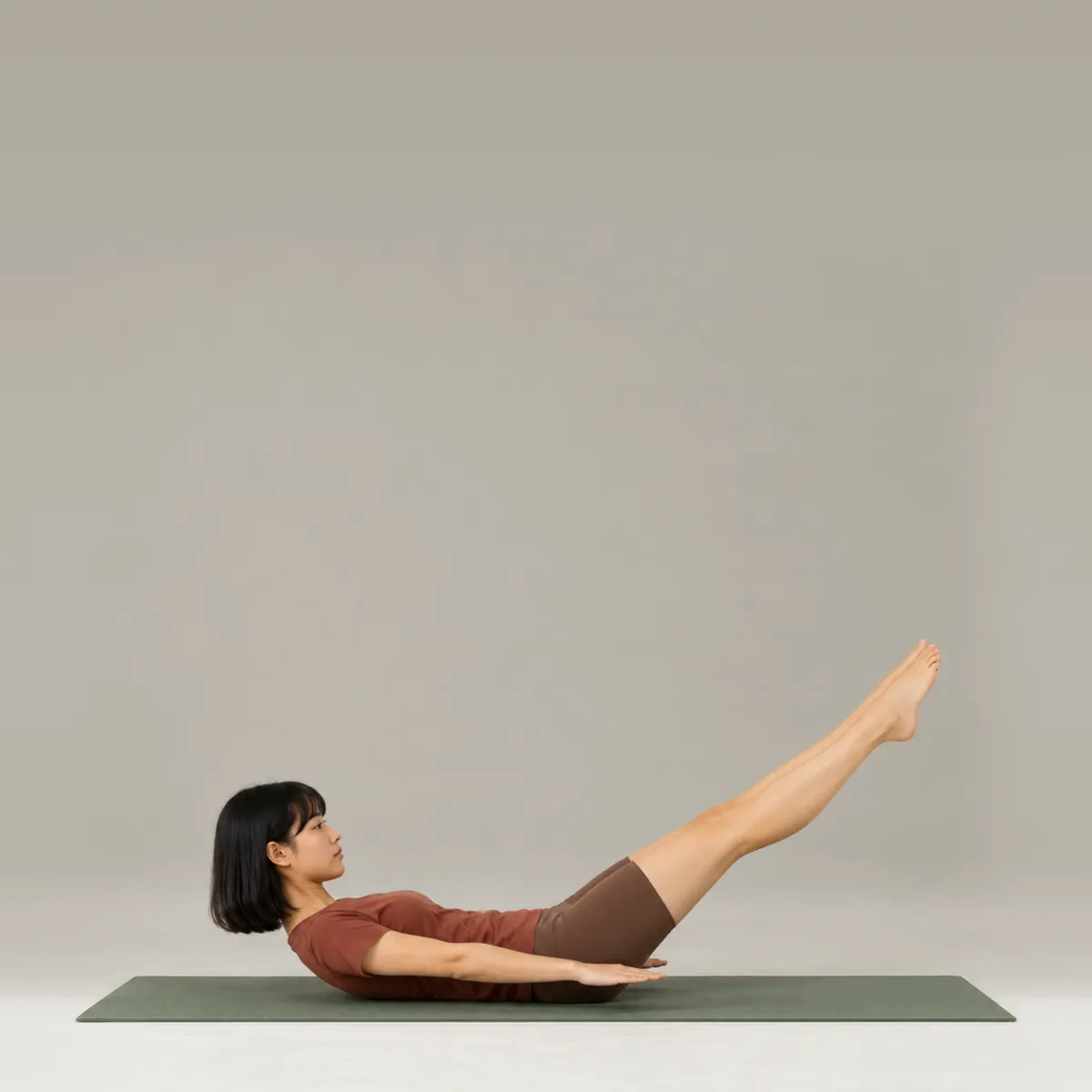
The wall is a helpful prop, not a requirement. The core skills of pilates, a stable pelvis, controlled breath, and a spine that moves with intention, are fully available on a mat. Exercises like the hundred, dead bug, and single leg stretch train those skills without any support at all.
If you do not have a clear wall, or the trend feels like one more thing to keep up with, start with mat work. Our guide to pilates at home for beginners covers five exercises to begin with, and the differences between pilates and yoga can help you decide what to pair it with.
What to be skeptical about
Some wall pilates content promises dramatic changes in a few weeks. Be wary of that. Pilates can help build core strength, control, and body awareness over time, but no single format reshapes a body quickly, and results depend on consistency, sleep, and everything else in your life. Choose a program because you enjoy it and will repeat it, not because of a before-and-after photo.
Check that your wall is clear and your mat will not slide. If you are pregnant, have a back or neck injury, or feel sharp pain during an exercise, stop and check with a clinician before continuing.
Where Kova fits
Kova focuses on mat-based yoga and pilates, which covers the same foundations. Its AI pilates coaching uses on-device pose tracking on your iPhone or iPad to notice visible alignment changes, like a lower back lifting during core work, and offers a calm spoken cue while you are still moving. Your camera feed never leaves your device.
A short intake builds a personalized 4-week plan that blends yoga and pilates and rebalances weekly around what you completed. In a sense, the coaching does what the wall does: it gives you a reference point, so you know when your alignment is drifting.
A wall is a good teacher because it does not move. Good feedback works the same way.
Questions this guide answers
Is wall pilates good for beginners?
It can be. The wall offers support and feedback that help beginners learn alignment. Mat pilates is equally beginner-friendly if you do not have a clear wall.
Is wall pilates better than mat pilates?
Not better, just different. The wall adds support and resistance for some exercises, while mat pilates trains the same core skills without a prop.
How often should you do wall pilates?
Two to three sessions a week of 15 to 30 minutes is a sensible start. Consistency matters more than any single session.
A coach that sees you move.
Pre-order Kova on the App Store. It downloads automatically on release day, and your first practice is free.