Yoga · Intermediate
Revolved side angle
Parivrtta Parsvakonasana
Also called Twisted side angle, Prayer twist
Revolved side angle is a twisting lunge where you hook one elbow outside the opposite knee and turn your chest toward the side. It builds strength in the legs and invites rotation through the upper back. Length comes first in this pose, so you twist from a tall spine rather than a rounded one.
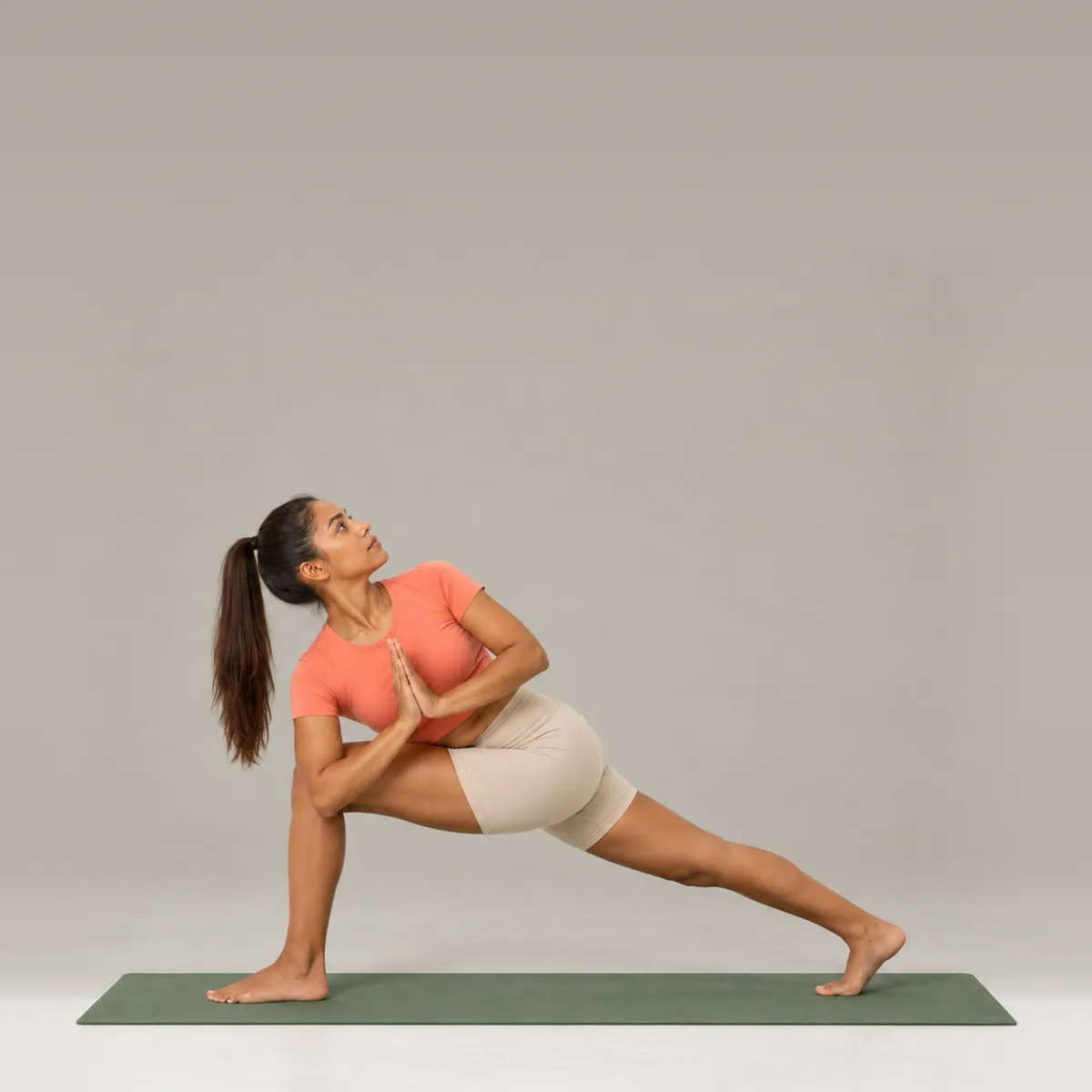
How to do Revolved side angle
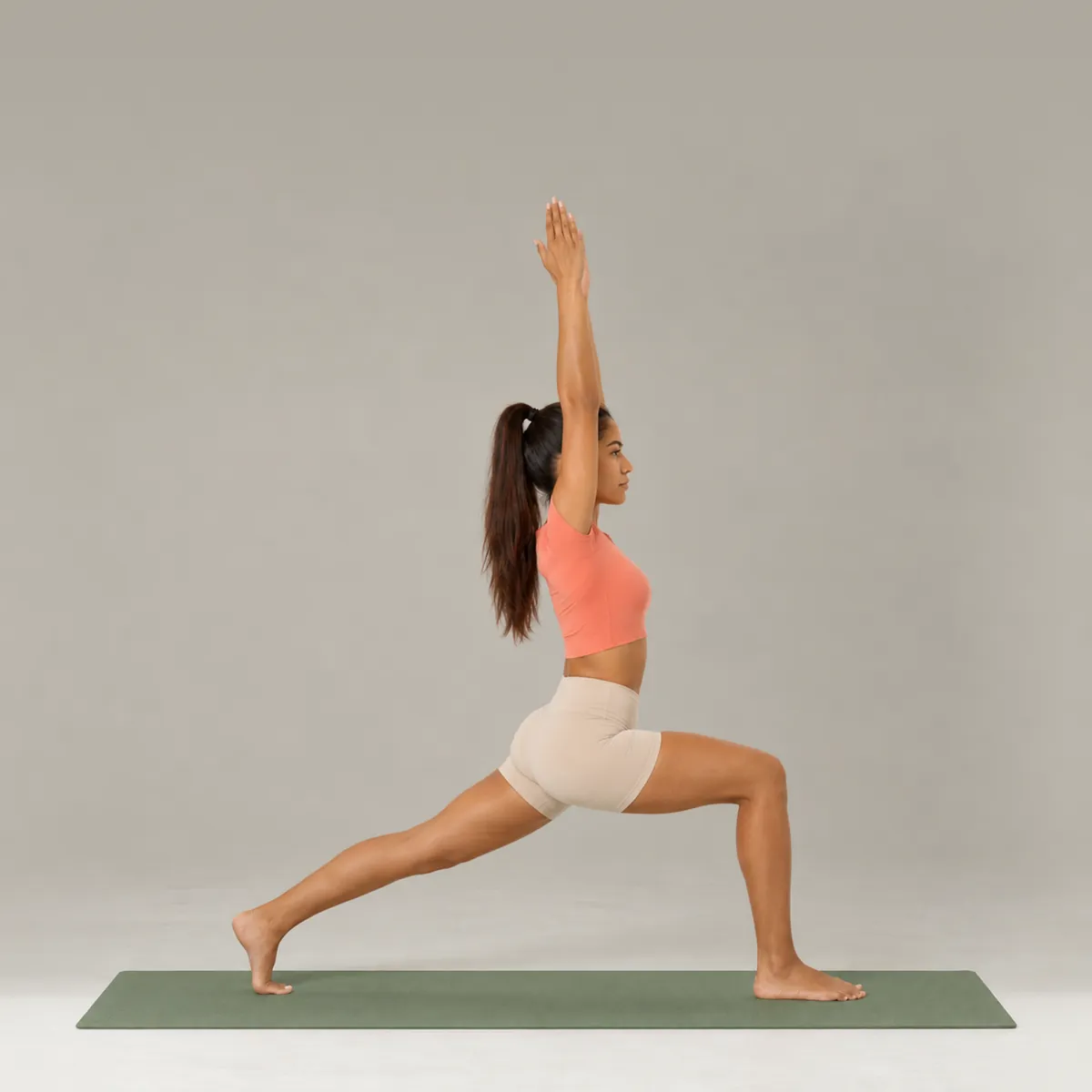
- 1Start in crescent lunge with your right foot forward and your left heel lifted.
- 2Bring your palms together in front of your chest.
- 3Inhale to lengthen your spine, then exhale and twist your torso to the right.
- 4Hook your left elbow on the outside of your right thigh, close to the knee.
- 5Press your palms together to help turn your chest toward the side of the mat.
- 6Keep your right knee over your ankle and your back leg long and strong.
- 7Look to the side, or up if your neck feels comfortable.
- 8Hold for five breaths, then unwind as you inhale, step back to downward dog, and switch sides.
Common mistakes and how to fix them
The elbow pushes the front knee inward.
Press your knee back against your elbow so they meet evenly, and keep your knee pointing over your middle toes.
The spine rounds to force a deeper twist.
Come up a little, lengthen through the crown of your head, then turn again as you exhale.
The back knee sags and the hips sink.
Lift the back of your thigh and press back through your heel, or lower the knee to the mat on purpose for a supported version.
The neck cranks up toward the ceiling.
Turn your gaze to the side or down until your neck feels at ease.
Modifications
- Lower your back knee to the mat and pad it with a folded blanket.
- Keep your palms together at your chest instead of opening your arms.
- Place your lower hand on a block outside your front foot and reach your top arm up.
- Shorten your stance so the twist feels less intense.
Benefits
- Strengthens the thighs and glutes.
- Encourages rotation through the upper back.
- Builds balance and focus in a twist.
- Stretches the hip flexors of the back leg.
Breath
Inhale to grow tall and exhale to turn. If your breath feels cramped, ease out of the twist a little.
Take care
Take care with back, knee, or neck injuries, and twist only as far as feels comfortable. Build from crescent lunge and extended side angle first, and stop if you feel sharp pain.
Revolved side angle questions
Where should my elbow go in revolved side angle?
Hook your elbow on the outside of your front thigh, close to the knee. If it does not reach, keep your palms together and twist less, or lower your back knee.
Should my back knee be up or down in revolved side angle?
Both are common. Lifting the back knee asks for more balance and leg strength, while lowering it gives you a steadier base to learn the twist.
Why do I lose my balance in revolved side angle?
The twist narrows your base, and your feet may be lined up on one track. Step your feet a little wider apart side to side, or lower your back knee to the mat.