Yoga · Beginner
Crescent lunge
Ashta Chandrasana
Also called High lunge, Crescent pose
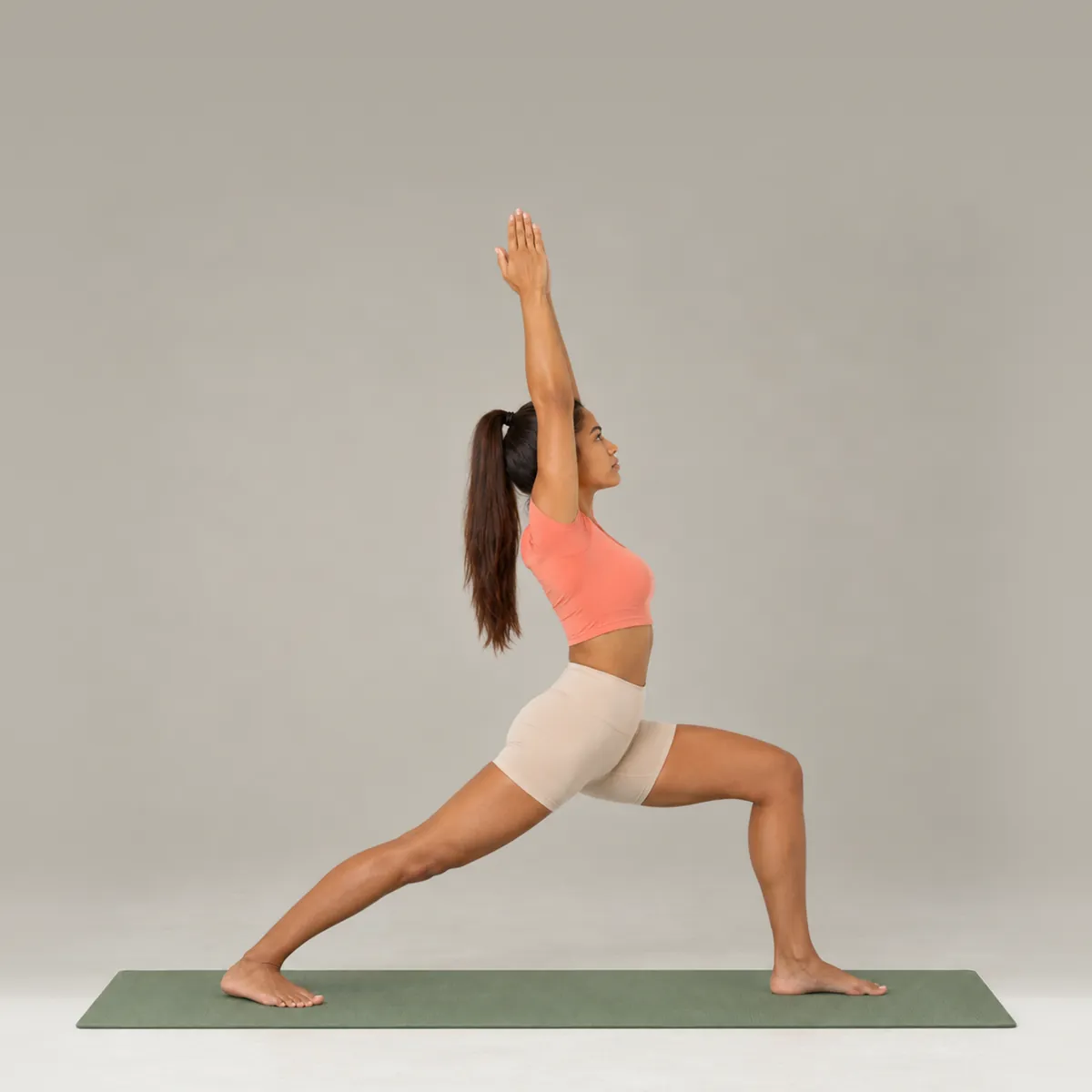
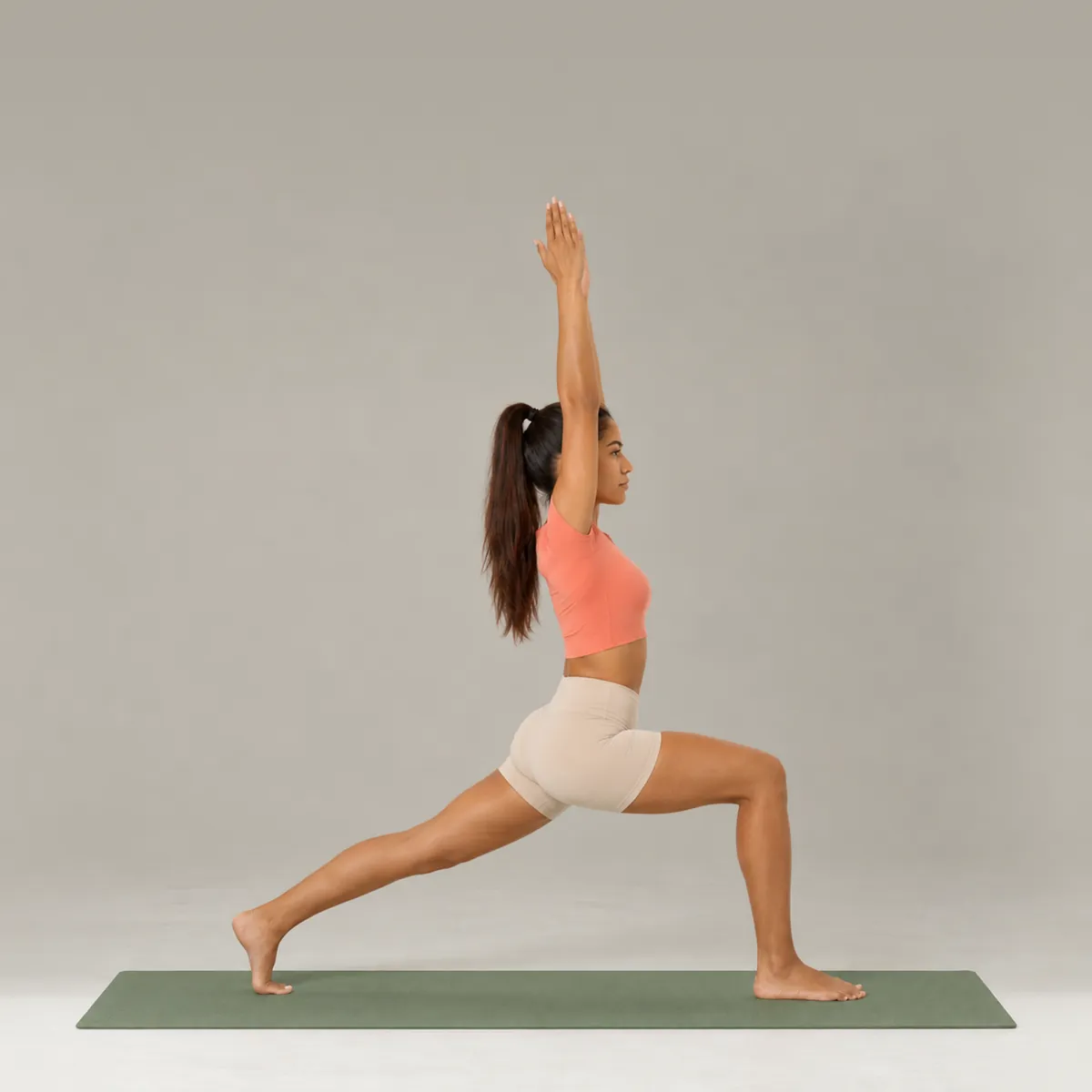
Crescent lunge is a high lunge with the back heel lifted and the arms reaching overhead. It strengthens the legs and stretches the front of the hip on the back leg. Because the back heel is off the floor, it asks for steady balance and a long, active back leg.
How to do Crescent lunge
- 1Start in downward dog with your hands shoulder width apart.
- 2Step your right foot forward between your hands and line your right knee up over your ankle.
- 3Stay on the ball of your left foot with the heel lifted, and keep your feet about hip width apart side to side.
- 4Press back through your left heel and lift the back of your left thigh so the back leg stays long and strong.
- 5Bring your hands to your front thigh and lift your torso upright over your hips.
- 6Reach your arms overhead with your palms facing each other, and soften your shoulders away from your ears.
- 7Draw your lower belly in and lengthen your tailbone toward the floor so your lower back stays long.
- 8Hold for five breaths, then lower your hands to the mat, step back to downward dog, and switch sides.
Common mistakes and how to fix them
The front knee travels well ahead of the ankle.
Step your back foot a little farther back until your front shin is close to vertical.
The back knee bends and the back leg goes soft.
Press back through your heel and lift the back of your thigh. Shorten your stance a little if you cannot keep the leg straight.
The lower back arches and the ribs flare forward.
Draw your lower belly in, soften your front ribs down, and bring your arms slightly forward if needed.
The feet line up on one narrow track, so you wobble.
Step your back foot out to the side until your feet sit about hip width apart.
Modifications
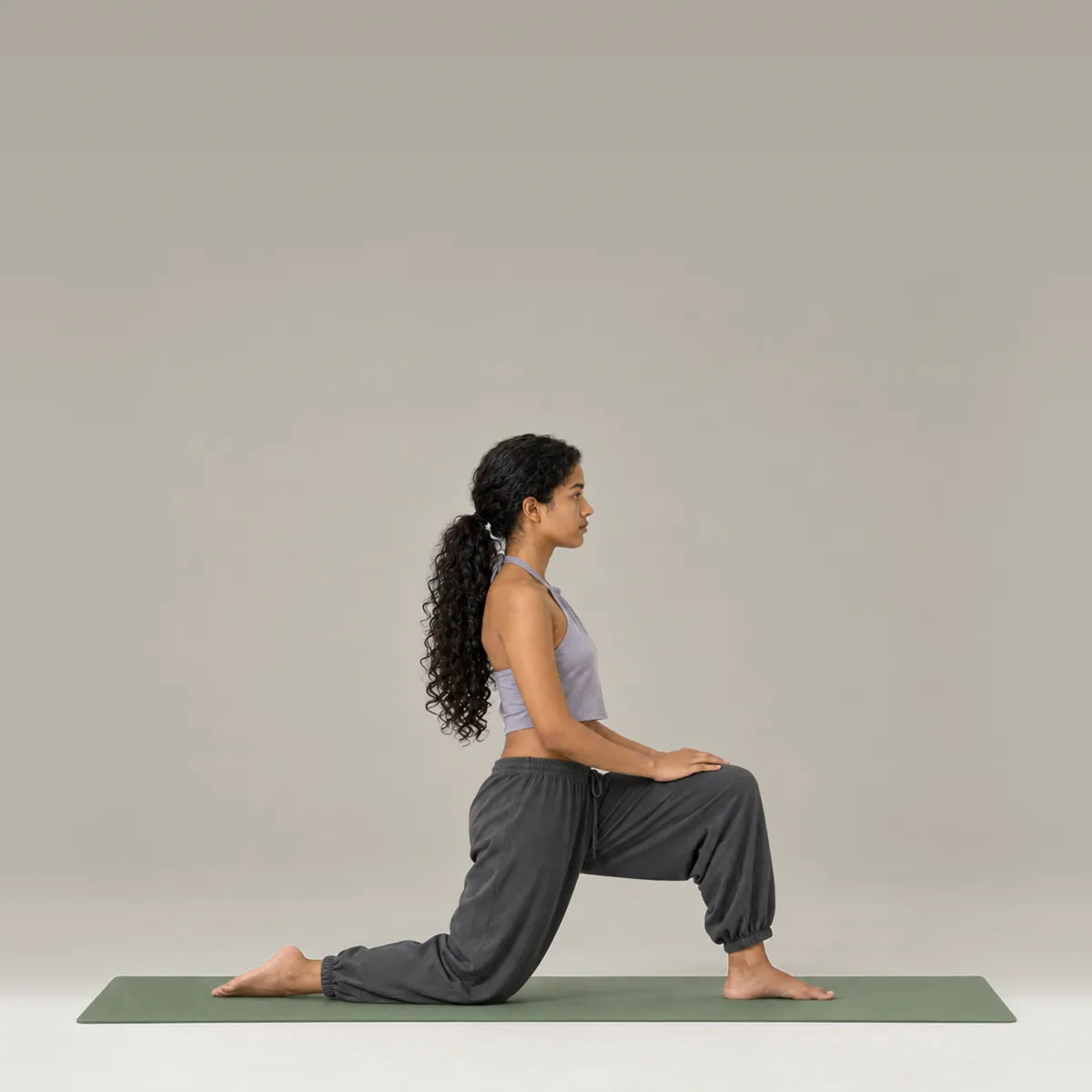
- Lower your back knee to the mat for a low lunge if your balance feels shaky.
- Keep your hands on your hips or on blocks beside your front foot.
- Shorten your stance and bend the front knee less.
- Practice beside a wall and rest one hand on it for support.
Benefits
- Strengthens the thighs, glutes, and calves.
- Stretches the hip flexors of the back leg.
- Builds balance on a narrow base.
- Opens the chest and lengthens the sides of the body.
Breath
Inhale as you lift your torso and arms, then breathe evenly through the nose while you hold. Use each exhale to settle a little deeper into the front knee.
Take care
Take care with knee, hip, or lower back injuries, and lower the back knee if your balance feels unsteady. Stop if you feel sharp pain.
Crescent lunge questions
What is the difference between crescent lunge and Warrior I?
In crescent lunge, your back heel lifts and your back foot points forward. In Warrior I, your back heel presses down and your back toes turn out, which changes how your hips face.
Is crescent lunge the same as high lunge?
Yes, most teachers use the two names for the same pose. Both describe a lunge with the back knee lifted and the back heel off the floor.
Why do I lose my balance in crescent lunge?
Often the feet are lined up on one narrow track. Widen your stance so your feet sit about hip width apart, and press firmly through the ball of your back foot.