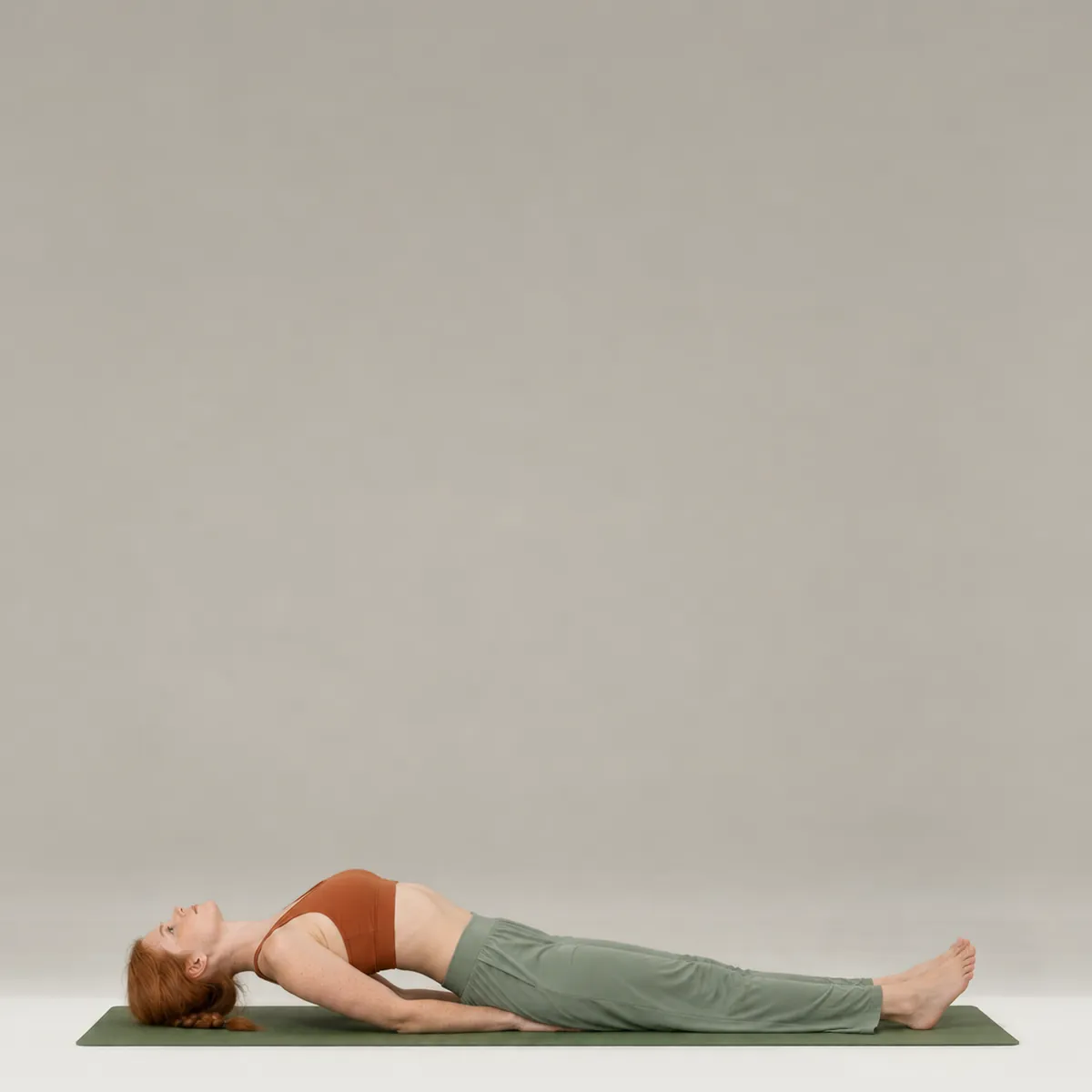
Five poses to undo a day at the desk

A short sequence for tight hips, a closed chest, and a stiff lower back.
Desk posture is not a moral failure. It is a shape your body had to hold for a long time. The goal after work is not punishment. It is giving the joints another set of options.
After hours of sitting, the body often needs contrast more than intensity: hips that extend, ribs that move, shoulders that rotate, and a spine that remembers it can change shape. You do not need a heroic session to get that.
A simple evening sequence
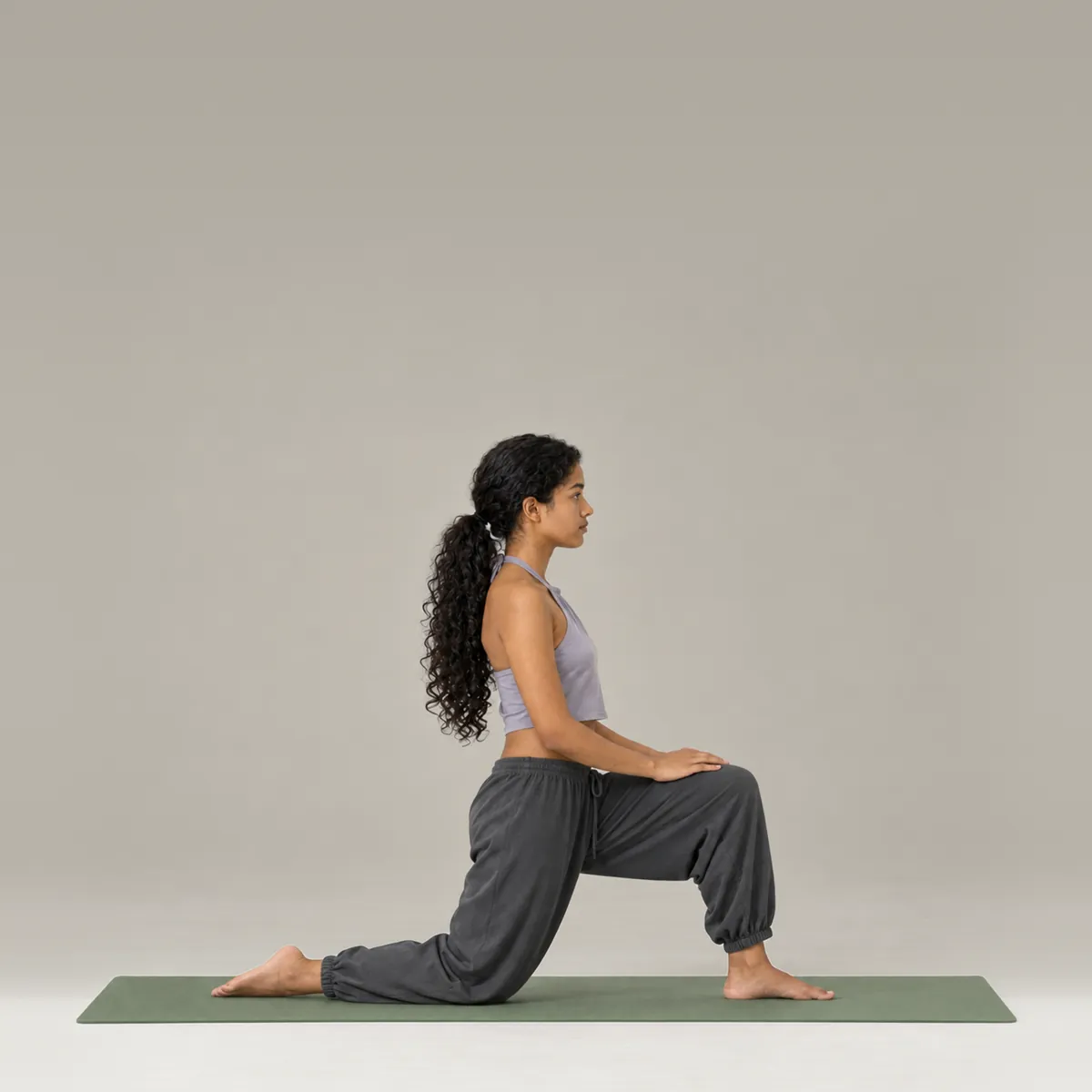
- Low lunge for hip flexors.
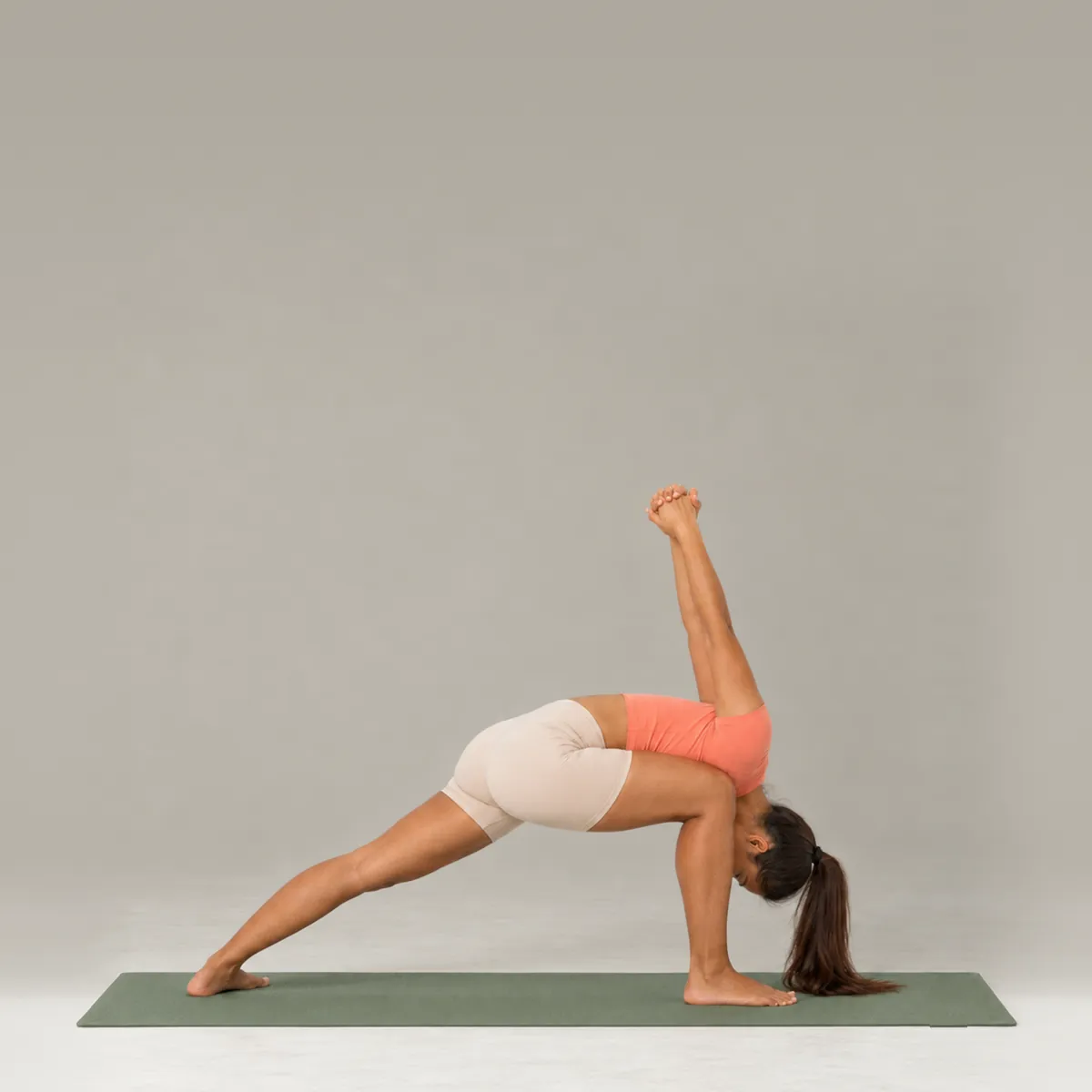
- Thread the needle for upper-back rotation.
- Supported bridge for the front body.
- Figure-four stretch for outer hips.
- Child's pose with side reach for ribs and back.
Move slowly enough to notice the first useful edge. If breath gets tight, back off. The point is to leave the mat with more room than you arrived with.
How to move through it
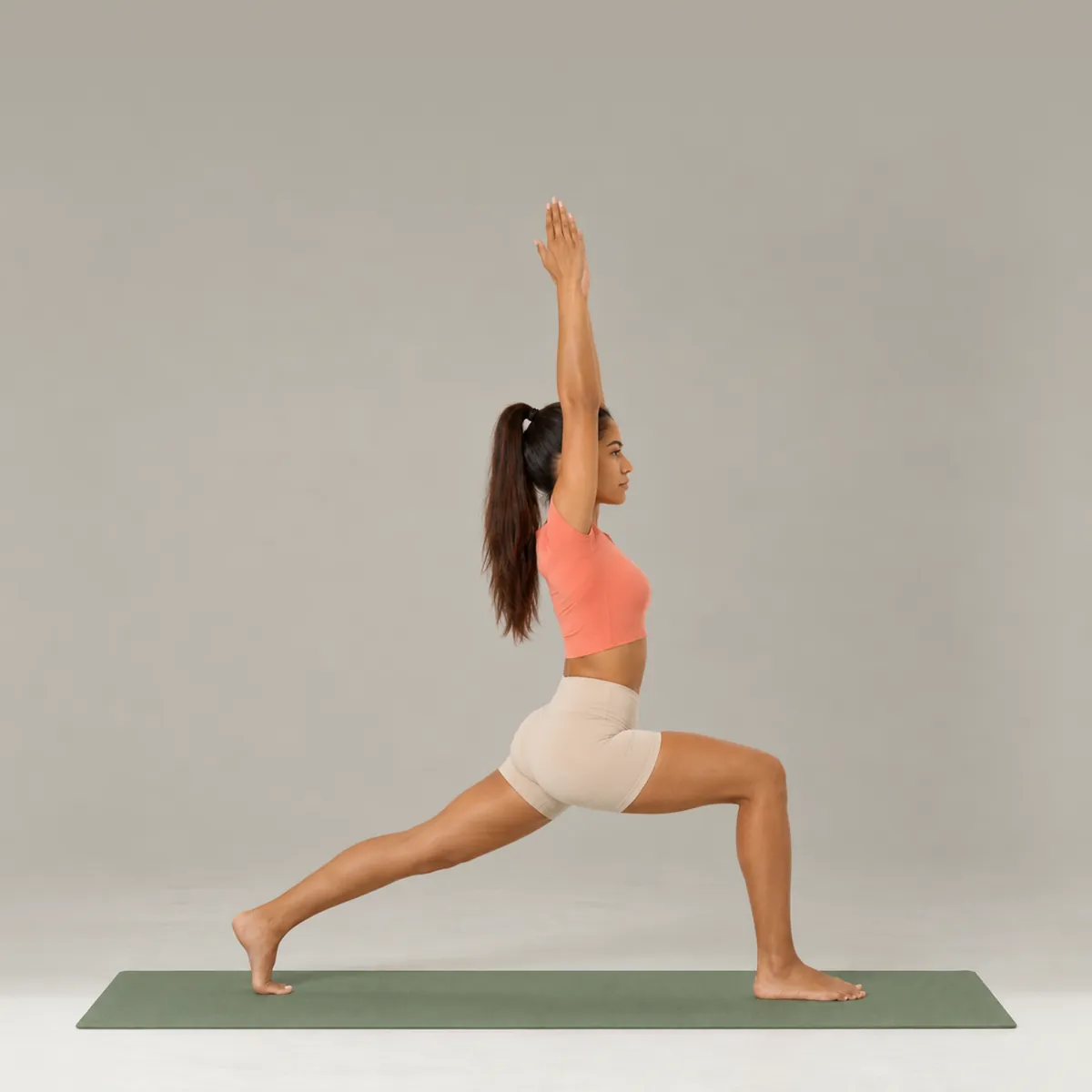
Spend a few breaths in each shape before trying to deepen it. In low lunge, think about length through the back leg instead of collapsing into the front hip. In thread the needle, let the rotation come from the upper back rather than yanking with the arm.
Supported bridge is a good place to slow down. Press through the feet, soften the front ribs, and notice whether your lower back is doing all the work. If it is, lower the height or shorten the hold.
Where coaching helps
Small setup changes matter in desk-recovery poses. A knee drifting inward or a rib cage flaring open can make a stretch feel intense without making it more useful. Real-time cues can help you find the version that fits your body.
That is especially true when you are tired. End-of-day practice should not require perfect body awareness. A timely cue can help you notice when you are forcing a stretch, holding your breath, or missing the calmer version of the pose.
Desk recovery is not about erasing the day. It is about giving your body more choices afterward.
A coach that sees you move.
Pre-order Kova on the App Store. It downloads automatically on release day, and your first practice is free.