Yoga for neck and shoulder tension from screens

Hours at a screen pull your head forward and your shoulders up. This short sequence gives them somewhere else to go.
Look up from your phone or laptop and notice where your head is. For many of us, it has drifted forward of the shoulders, the upper back has rounded, and the shoulders have risen a little toward the ears. Held for hours, that shape can leave the neck and upper back feeling stiff, heavy, or tired by the end of the day.
That is not a posture failure. It is a position your body has held for a long time. As with tight hips after a day at the desk, the most useful response is not one perfect stretch but a little movement in the opposite direction, done often. The sequence below takes about ten minutes and needs only a mat.
Why screens show up in your neck
The head is heavy, and the further forward it moves, the harder the muscles at the back of the neck and upper back work to hold it up. Meanwhile the chest and the fronts of the shoulders spend the day in a shortened position. The result many people feel is a tight band across the top of the shoulders and a stiff upper back.
Yoga can help by moving the spine through rotation and extension, opening the chest, and giving the shoulder blades a chance to move. Breath matters too. Shallow, high breathing tends to recruit the neck and shoulders, so slower breaths into the ribs can ease some of that effort.
A 10-minute screen reset
- Cat and cow, one minute, moving slowly with the breath to wake up the whole spine.
- Thread the needle, five breaths each side, letting the upper back rotate and the shoulder rest.
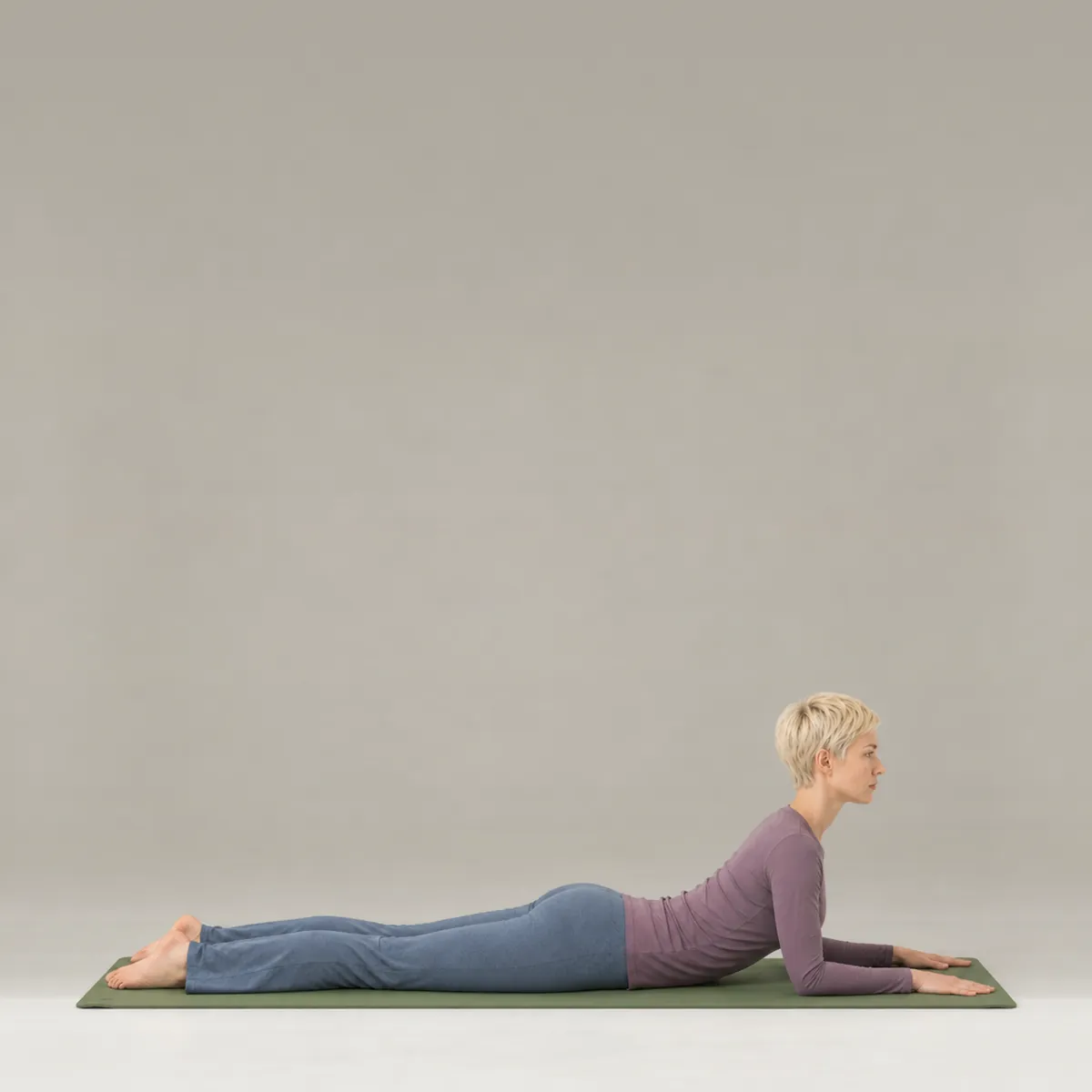
- Sphinx pose, five to eight breaths, drawing the chest forward between the shoulders rather than sinking into them.
- Child's pose with the arms reaching forward, five breaths, letting the head rest heavy.
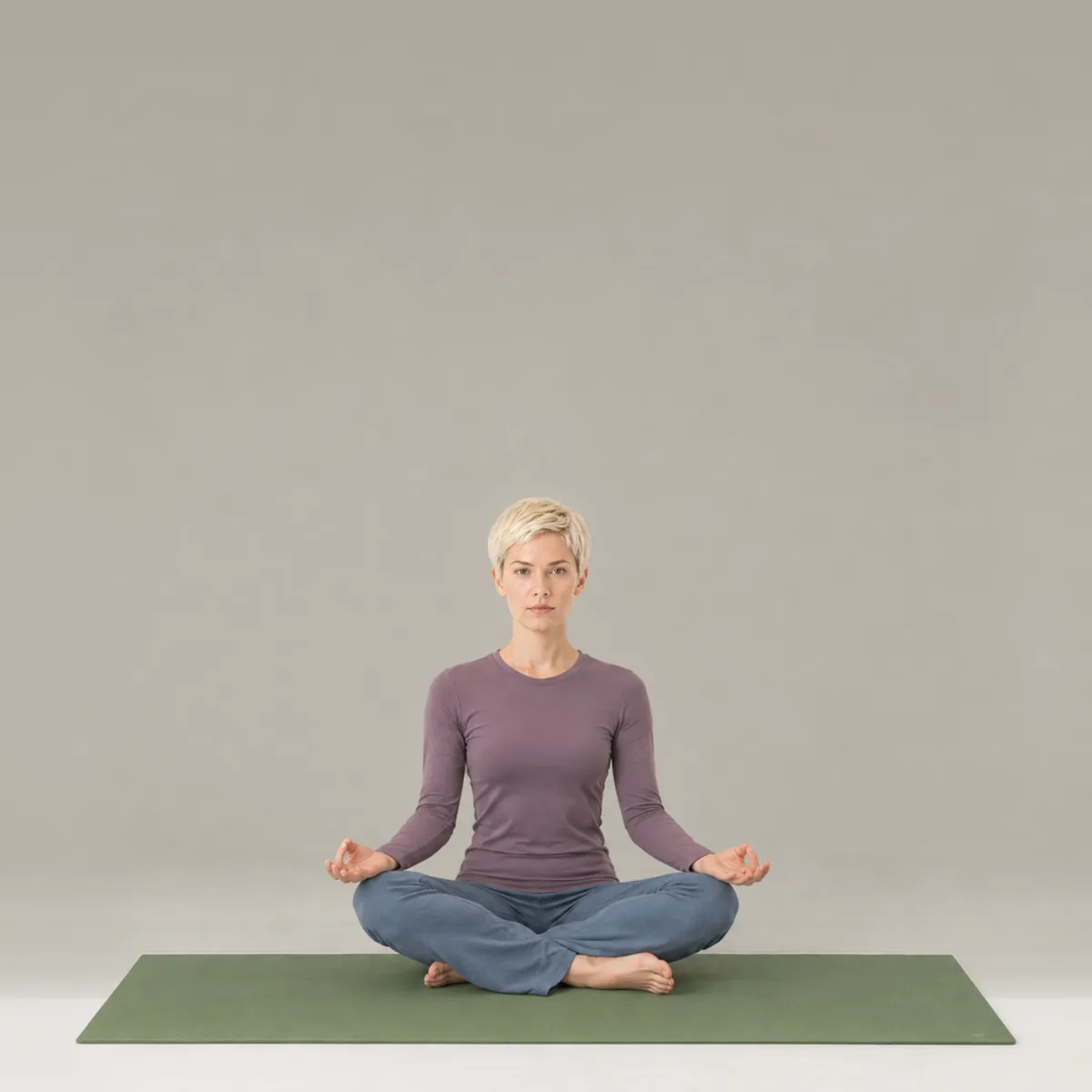
- A seated neck release in easy pose: let one ear drop toward its shoulder for five breaths, then switch sides.
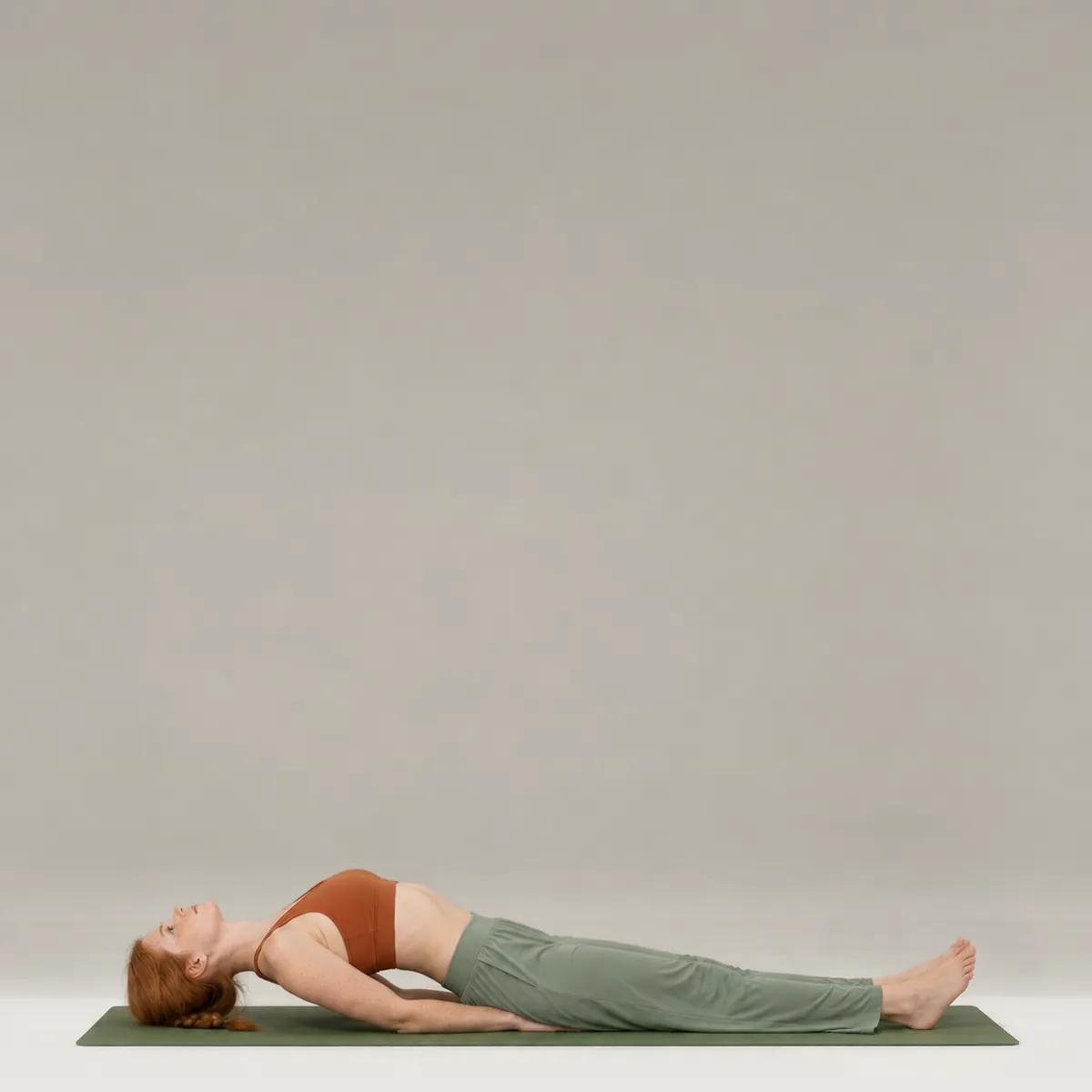
- Fish pose, supported on a block or rolled blanket under the upper back, with your head resting on the floor, for one minute.
Move gently and stay well within a comfortable range. With the neck especially, smaller is better. If any position makes your symptoms worse, skip it.
The cues that make it work
Small details change these shapes a lot. In thread the needle, let the rotation come from the middle of your back rather than pushing down through the arm. In sphinx, press your forearms into the mat and let the shoulder blades slide down your back, so the neck stays long instead of compressing. In the neck release, keep the opposite shoulder heavy rather than lifting it to meet the ear.
Through all of it, breathe low and wide into the ribs. If you catch your shoulders rising on the inhale, soften them on the exhale and try again.
Make it a habit, not a rescue
A single session can feel good, but tension that builds daily usually responds best to movement that happens daily. Try the full sequence in the evening and one or two pieces during the day: a few rounds of cat and cow before lunch, or a slow neck release between meetings. Short and frequent tends to beat long and occasional.
The shoulders and upper back collection has more options if you want variety, and the posture collection focuses on strengthening the back of the body so upright feels easier to hold.
When to see someone
Ordinary stiffness should ease as you move. Stop and speak to a clinician if you have pain that spreads into the arm, numbness or tingling in the hands, headaches that come with neck pain, dizziness, or pain after an injury. Yoga can be a useful part of a routine, but it is not a treatment for those symptoms.
Where Kova helps
Neck and shoulder work is subtle, and it is easy to sink into the joints or hike the shoulders without noticing. Kova uses on-device pose tracking to notice visible changes in alignment, like shoulders lifting toward your ears, and offers one calm spoken cue at a time. If you would rather not look at another screen after a long day, every session also works in audio-only mode. Your camera feed never leaves your device.
Your shoulders do not need to be fixed. They need somewhere else to go.
Questions this guide answers
Can yoga help with neck and shoulder tension?
Many people find that gentle yoga eases everyday stiffness by moving the spine, opening the chest, and slowing the breath. It is not a treatment for injuries or nerve symptoms, so see a clinician if pain persists or spreads.
What is the best yoga pose for a stiff neck?
No single pose suits everyone. Thread the needle, cat and cow, and a gentle seated neck release are good starting points because they move the upper back and neck without much load.
How often should I stretch my neck and shoulders?
Short, frequent sessions tend to work best, such as a few minutes during the day and a longer ten-minute reset in the evening.
A coach that sees you move.
Pre-order Kova on the App Store. It downloads automatically on release day, and your first practice is free.