Why you wobble in tree pose, and how to steady it

Wobbling in tree pose is normal. Most of it comes from a few fixable setup habits, not a lack of balance.
Tree pose looks like the calmest shape in yoga. Then you lift one foot and the whole room seems to tilt. If you wobble, sway, or hop out of it within a few breaths, you are in very good company.
Wobbling is not a sign that you are bad at balance. It is what balance training feels like. Your feet, ankles, and hips are constantly making small corrections, and the pose teaches them to do it with less effort. The big wobbles, though, usually come from a few setup habits that are easy to change.
Reason one: the lifted foot is in the wrong place
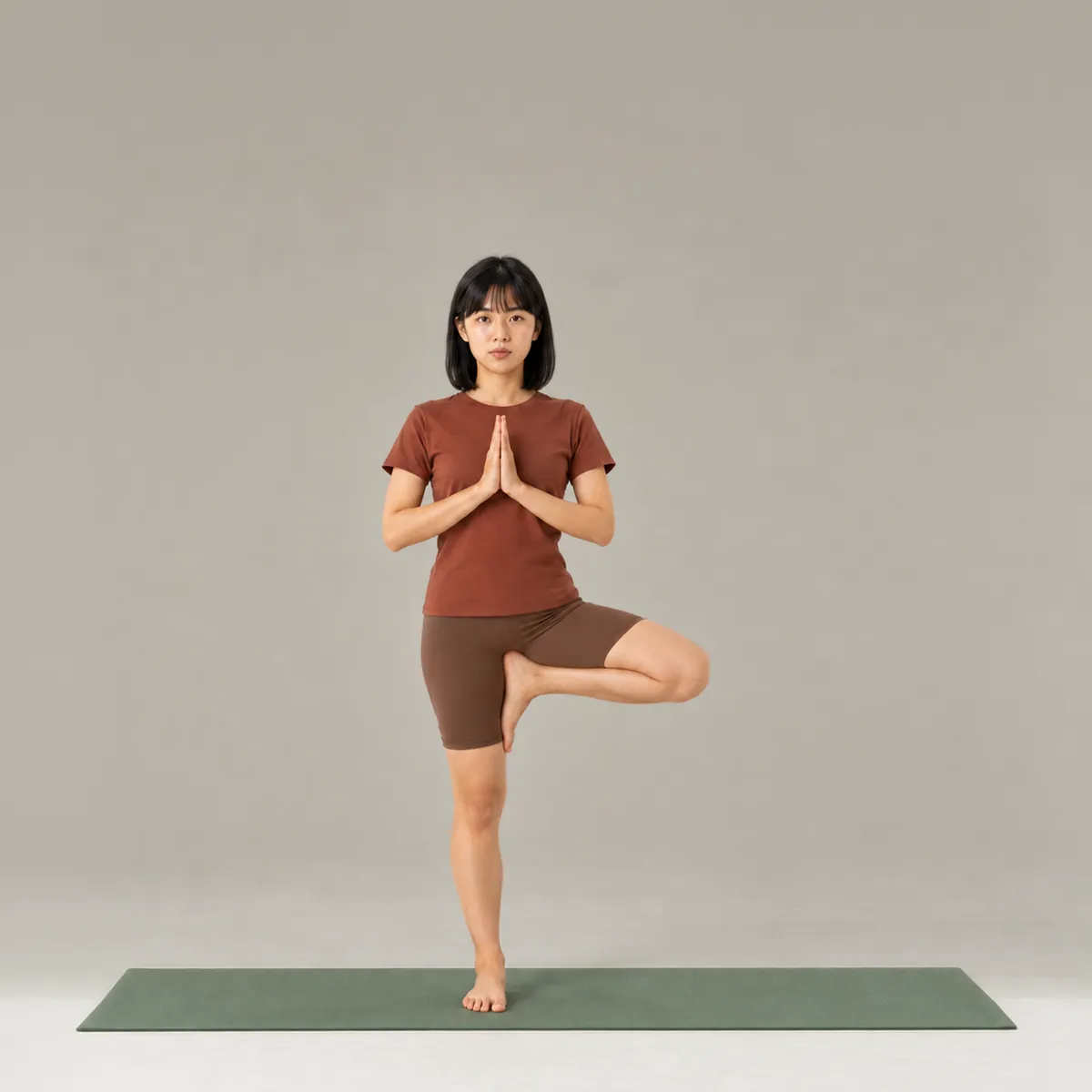
The lifted foot can rest on the inner ankle, the inner calf, or the inner thigh. It should never press into the side of the knee, which is not built to take sideways pressure. If your foot keeps sliding down your thigh, that is not a strength problem. Move it lower, to the calf, or to the ankle with your toes on the floor like a kickstand.
Then press the foot and the standing leg into each other with equal effort. That gentle squeeze from both sides gives the pose a center to organize around.
Reason two: the standing foot is passive
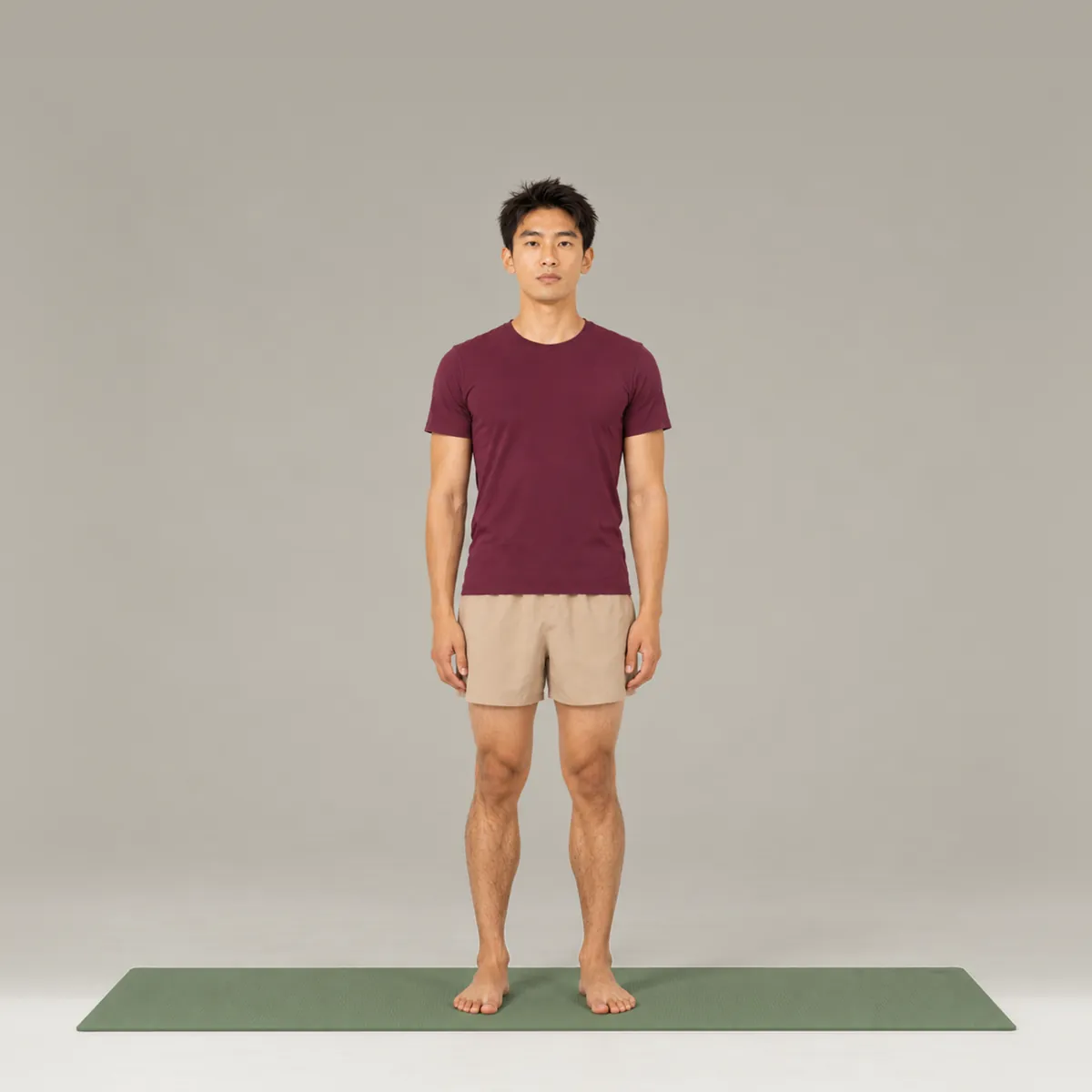
Balance starts at the floor. Many people stand on the outer edge of the foot or let the arch collapse without noticing. Spread your toes and feel three points: the base of the big toe, the base of the little toe, and the center of the heel. Keep all three in contact. Practicing mountain pose with this awareness first makes tree pose noticeably steadier.
Keep the standing knee soft rather than locked. A hyperextended knee can feel stable, but it hands the work to the joint instead of the muscles that should be doing it. If you want to build the strength behind a steady standing leg, chair pose and warrior II train it without the balance challenge.
Reason three: the hips are drifting
When the bent knee opens out to the side, the standing hip often slides outward and the pelvis tilts. You end up hanging off one side of your body. Instead, imagine the standing hip drawing gently in toward the midline, and let the bent knee open only as far as your pelvis can stay level. A smaller opening with level hips is a steadier tree than a wide knee with a tilted pelvis.
Reason four: your eyes and breath are moving
Pick a fixed point at eye level or slightly lower, something that is not moving, and keep a soft gaze on it. Looking around the room or down at your own foot gives your balance system conflicting information.
Breath matters too. Holding your breath stiffens the body, and stiffness makes every small correction bigger. Aim for a slow, even rhythm you can keep for five breaths.
A simple progression
- Start with your toes on the floor and your heel on the inner ankle, near a wall if you need it.
- Move the foot to the inner calf, with your hands at your chest.
- Bring the foot to the inner thigh once the calf feels steady for five breaths.
- Raise the arms overhead, then try softening your gaze.
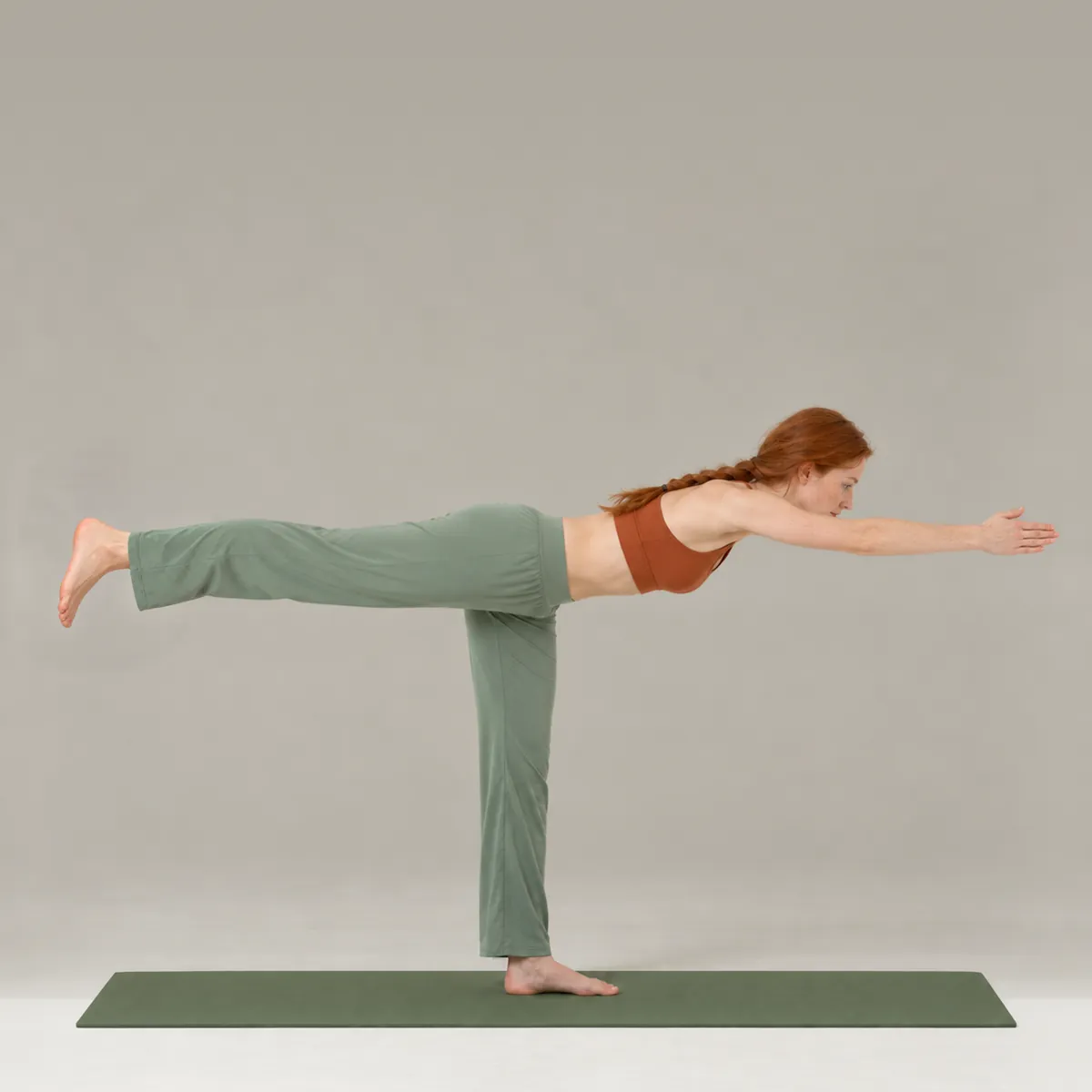
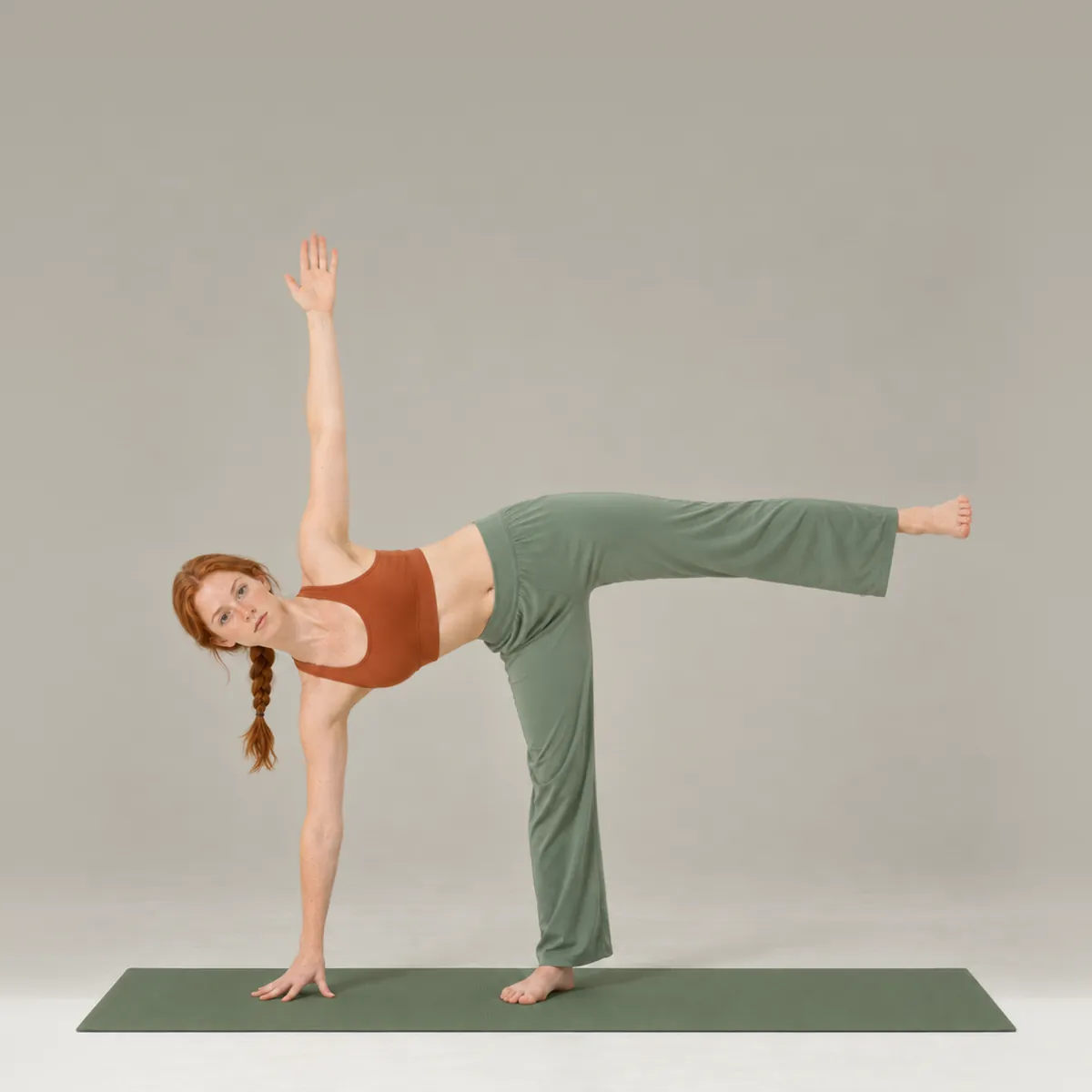
- For more challenge, explore warrior III or half moon from the balance collection.
Stay at each stage until you can hold it for five steady breaths on both sides before moving on. There is no prize for the highest foot. A tree with the heel at the ankle and a calm breath is doing everything the pose is meant to do.
Practice both sides every time, and expect one side to be wobblier. That is common, and it is a good reason to spend an extra breath on the harder side. Balance also changes day to day with sleep, stress, and energy, so a wobbly morning is not a step backwards.
If you have dizziness, an ankle injury, or are pregnant, practice next to a wall or a sturdy chair, and check with a clinician about what is right for you.
Where Kova helps
Many tree pose problems are hard to feel from the inside. A tilted pelvis or a foot creeping toward the knee can seem fine until you see it. Kova uses on-device pose tracking to notice visible changes like these and gives a calm spoken cue, such as moving the foot lower or leveling the hips, while you are still balancing.
A live form score shows how the hold is going, and if a cue is unclear, the "Not sure?" demo shows you the shape. Nothing is recorded or uploaded.
A steady tree is not one that never moves. It is one that keeps finding its way back to center.
Questions this guide answers
Why can't I balance in tree pose?
Most wobbling comes from a passive standing foot, a lifted foot placed too high to stay put, drifting hips, or a moving gaze. Lower the foot, root the standing foot, level the hips, and fix your gaze on one still point.
Where should my foot go in tree pose?
On the inner ankle, inner calf, or inner thigh, never on the side of the knee. Choose the height where you can hold steady for five slow breaths.
Is it normal to balance better on one side?
Yes. Most people have a steadier side. Practice both sides every time and give the harder side a little extra time.
A coach that sees you move.
Pre-order Kova on the App Store. It downloads automatically on release day, and your first practice is free.