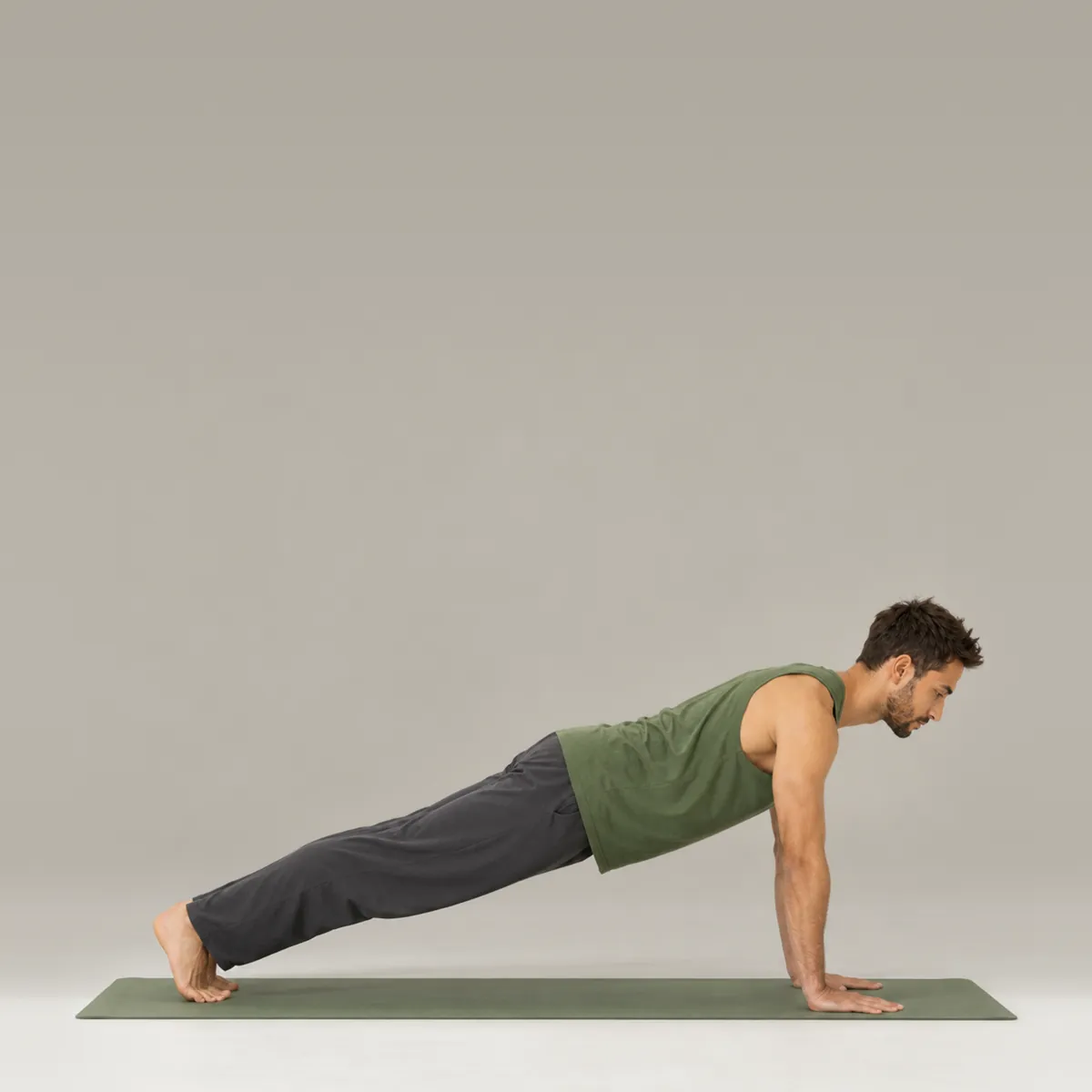
Plank form: why your plank hurts your lower back

A plank should work your whole front body, not your lower back. Here are the setup mistakes behind that ache, and how to fix them.
Plank pose looks simple. Hands under shoulders, body in a straight line, hold. That simplicity is why it shows up everywhere, from yoga flows to pilates mat classes to warm-ups at the gym. It is also why so many people practice it with a quiet ache in the lower back and assume that is just what planks feel like.
It usually is not. A well-organized plank spreads effort through the shoulders, the abdominals, the glutes, and the legs. When the lower back is doing most of the work, something in the setup has drifted. The fixes are small, and most of them are about position rather than strength.
Mistake one: hips sagging toward the floor
This is the most common cause of lower back discomfort in a plank. As the abdominals tire, the hips drop, the lower back arches, and your weight hangs on the spine instead of being held by the trunk. It often happens slowly, so you may not notice it until the ache arrives.
To fix it, gently draw your lower ribs toward your hips and lightly squeeze your glutes. Think about lengthening your tailbone toward your heels. Your body should feel like one long line from head to heels, and your belly should feel engaged rather than hanging.
Mistake two: hips piked high
Some people overcorrect by lifting the hips into a shallow version of downward dog. It takes pressure off the core, which is exactly why it feels easier. Lower the hips until they are roughly level with your shoulders. A pike can feel straight from the inside, so a mirror or a side view is useful here.
Mistake three: sinking into the shoulders
If your chest drops between your shoulder blades and your shoulders creep toward your ears, the joints take a load your muscles should be carrying. Press the floor away firmly, spread your fingers, and let the space between your shoulder blades broaden slightly. Keep your hands under your shoulders rather than out in front of them.
Mistake four: holding your breath
A held breath makes a plank feel stronger for a few seconds and then makes it collapse. It also tends to tighten the neck and jaw. Keep the breath slow and steady. If you cannot breathe evenly, the hold is too long for now. Shorter planks with steady breathing build more than long ones you grit through.
- Hands under shoulders, fingers spread, floor pressed away.
- Lower ribs drawn toward the hips, belly engaged.
- Glutes lightly active, legs long, heels reaching back.
- Neck long, gaze slightly ahead of your hands.
- Breath slow enough to hear.
Build up to it, then branch out
If a full plank strains your back right away, start smaller. Lower your knees to the floor and keep the same long line from head to knees. Hold for 15 to 20 seconds with steady breath, rest, and repeat. Once that feels steady, lift the knees for short holds and add time gradually.
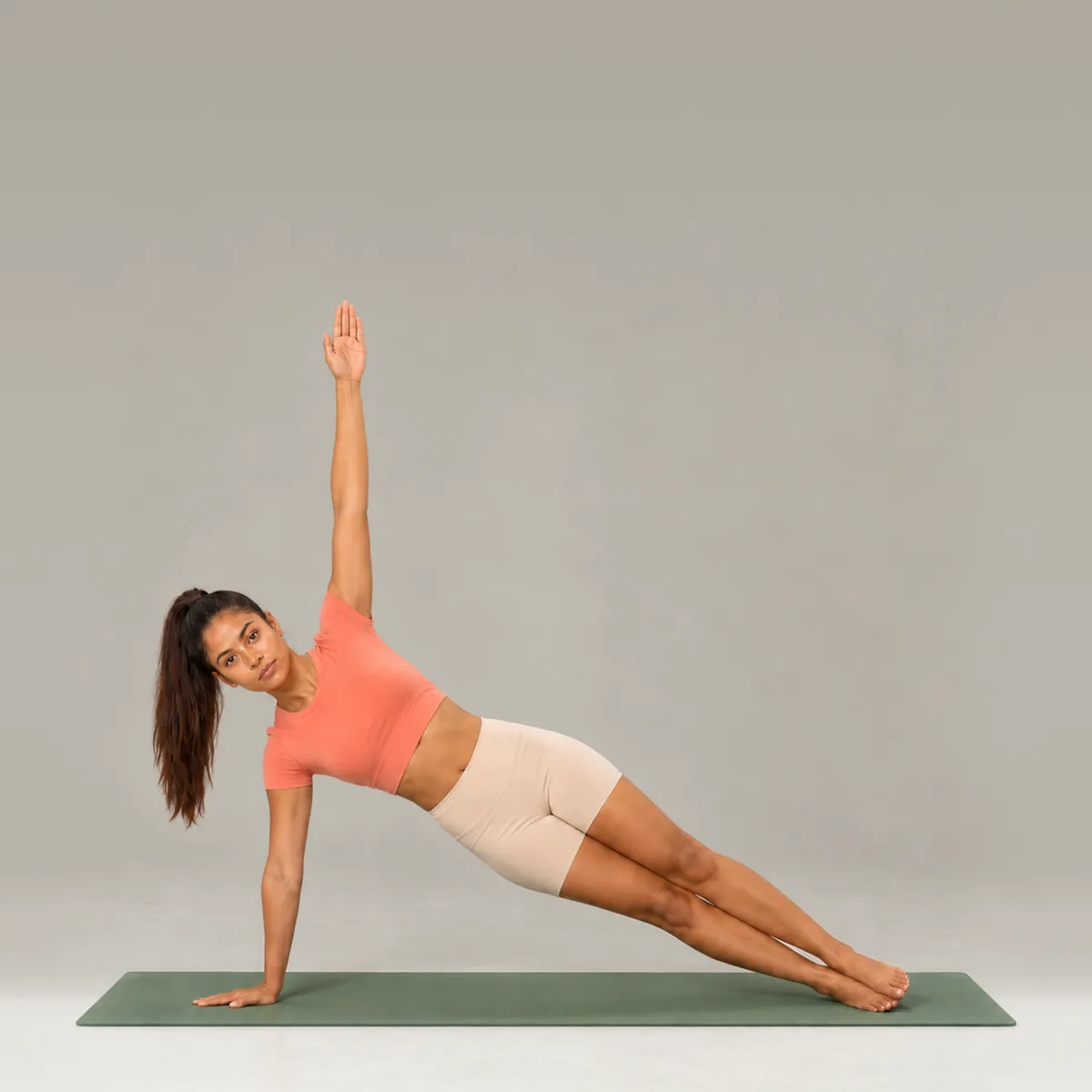
Dead bug trains the abdominals to keep the lower back steady while your arms and legs move, with the floor supporting your spine. Side plank works the sides of the trunk and the shoulder, and can be done with the bottom knee down. Bird dog is another gentle way to practice keeping the trunk still. The core strength collection brings more yoga and pilates options together.
However you progress, effort in the belly, shoulders, and legs is expected. Sharp pain, pain that spreads into the legs, or numbness or tingling is a reason to stop and check with a clinician, as is a recent back injury or pregnancy. Wrist discomfort is common at first. Coming onto your forearms can help, and if it persists, ask a qualified professional.
Where Kova helps
Plank mistakes are hard to feel from the inside, especially when you are tired. A slowly sagging hip feels the same as a level one until the lower back complains. Kova uses on-device pose tracking to watch the line from your shoulders to your heels while you hold, then offers a calm spoken cue, such as lift your hips slightly or press the floor away, while you can still adjust. A live form score shows how the hold is going, and nothing is recorded or uploaded.
A good plank is not the longest one. It is the one that stays long.
Questions this guide answers
Why does plank hurt my lower back?
Usually because the hips are sagging, which arches the lower back and shifts the load onto the spine. Draw the ribs toward the hips, engage the glutes, and shorten the hold until you can keep a straight line.
How long should a beginner hold a plank?
Fifteen to thirty seconds with steady breathing is a good start. Repeat a few short holds with rest rather than one long plank with drifting form.
Is a knee plank still useful?
Yes. It trains the same muscles with less load and is a good way to build strength while learning to keep your body in one long line.
A coach that sees you move.
Pre-order Kova on the App Store. It downloads automatically on release day, and your first practice is free.