Downward dog mistakes almost every beginner makes

It's the pose you'll see most in yoga, and the one most people quietly get wrong. Here's how to fix it.
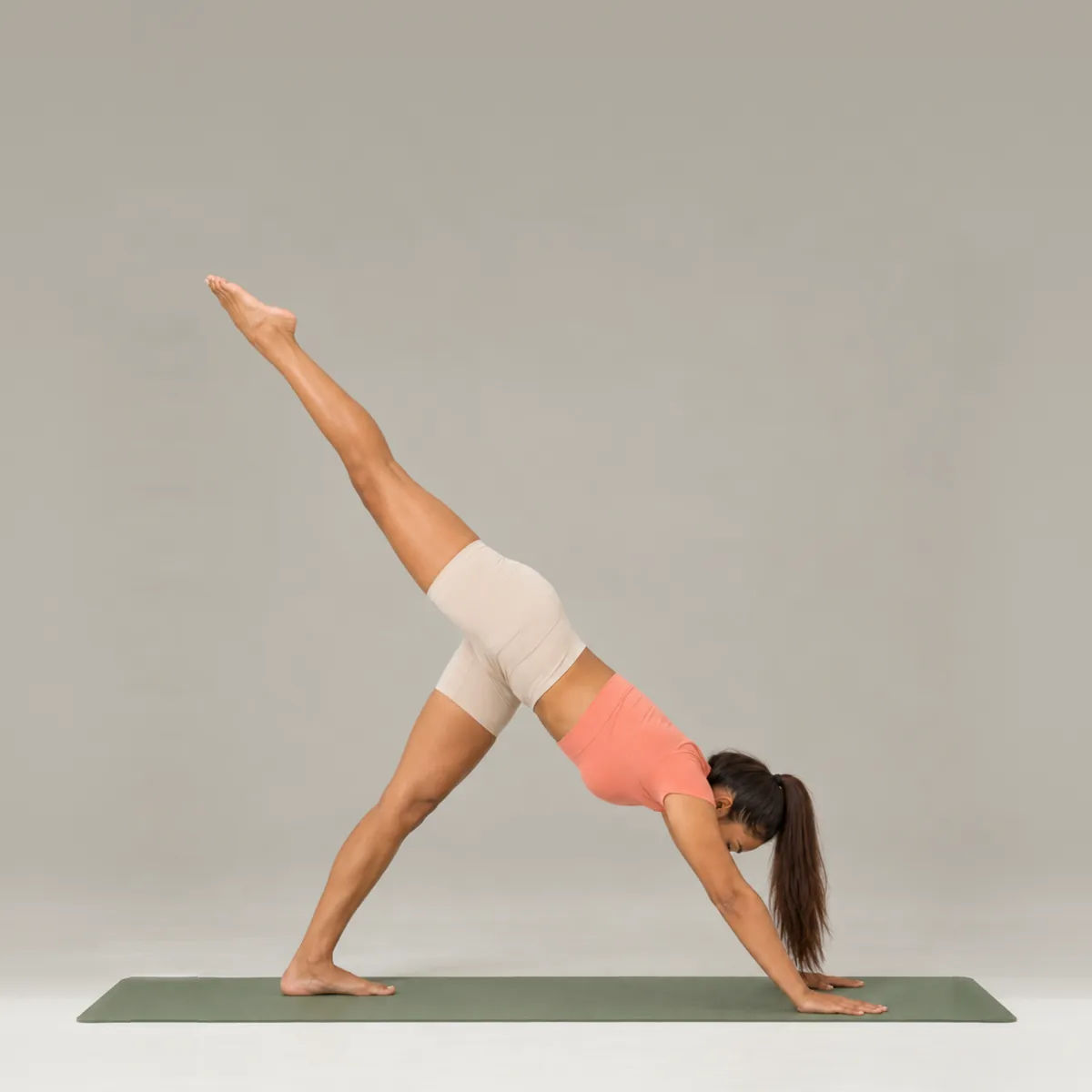
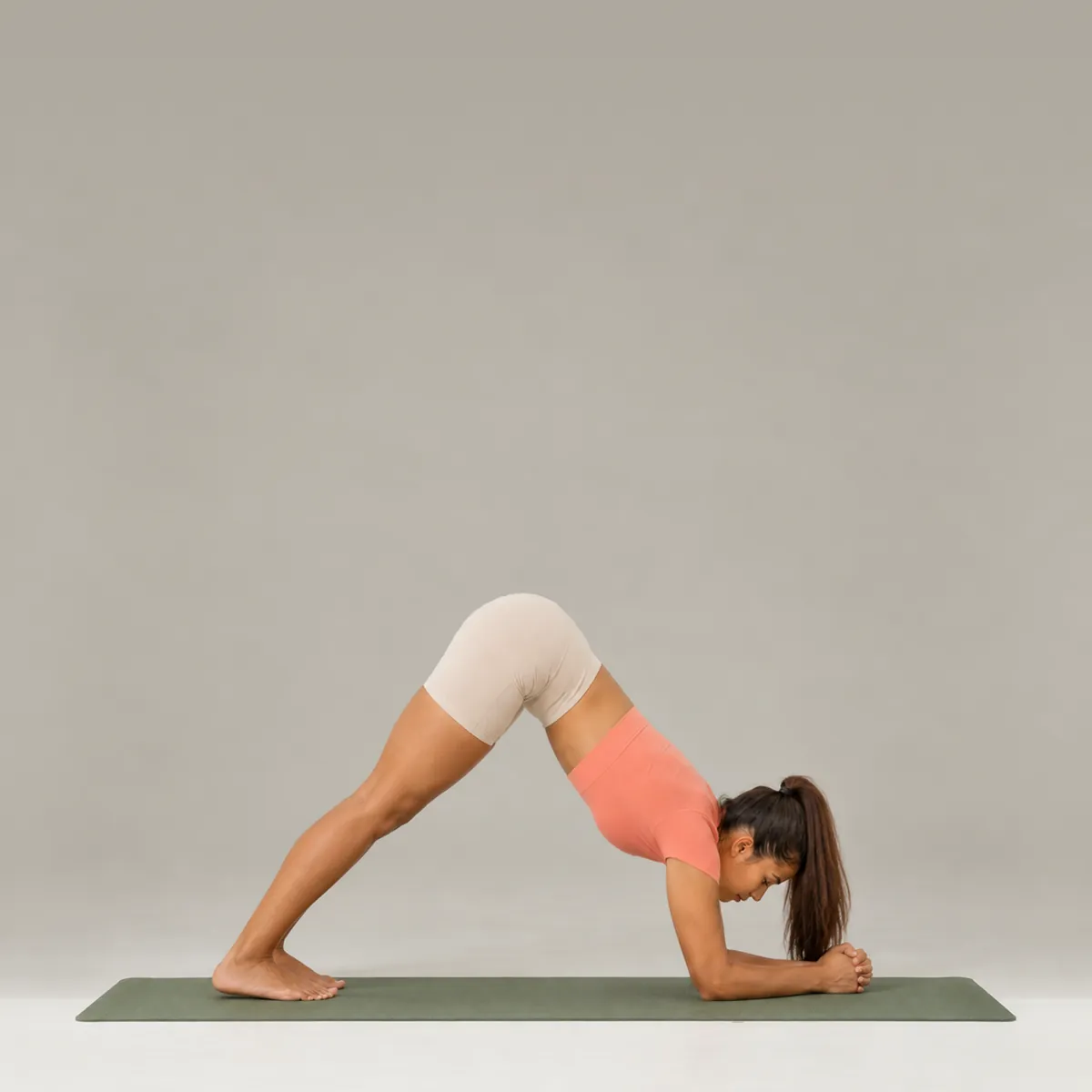
Downward facing dog shows up in nearly every yoga class, often dozens of times. That makes it one of the most useful poses to get right, and one of the easiest to practice wrong for years without noticing.
The good news is that the common mistakes are visible and fixable. Most come from trying to make the pose look like a photo instead of letting it do its job: lengthen the spine, load the shoulders well, and stretch the back of the legs.
Mistake one: chasing straight legs and flat heels
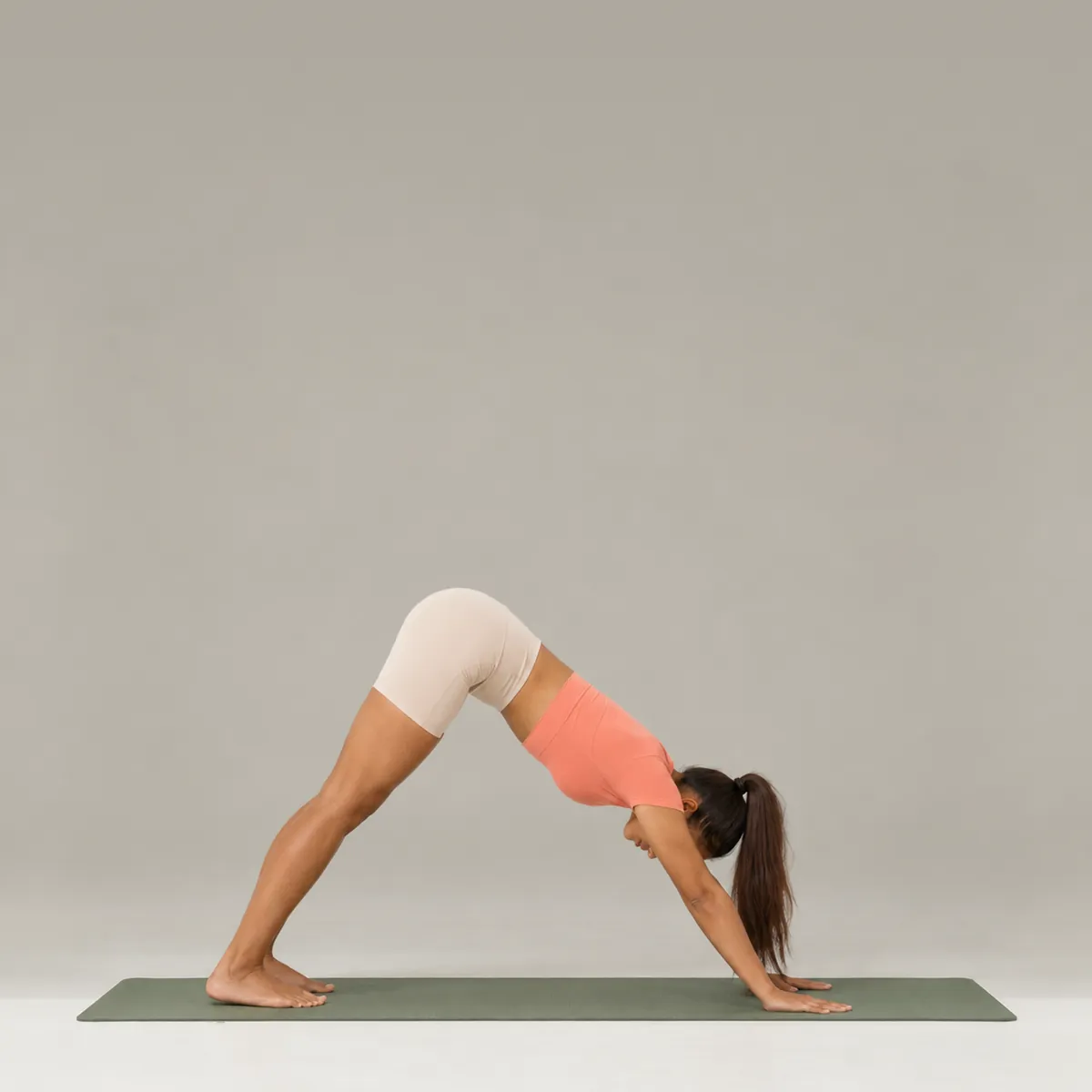
The picture in your head probably has straight legs and heels on the floor. For most bodies, especially beginners and anyone with tight hamstrings, forcing that shape rounds the lower back and pulls the pose apart.
The fix is to bend your knees generously and let your heels lift. Send your hips up and back until your spine feels long. Straighter legs can come later. A long spine with bent knees is a better downward dog than straight legs with a rounded back.
Mistake two: sinking into the shoulders
Many beginners let the chest collapse toward the floor and the shoulders crowd the ears. It can feel like a deep stretch, but it often loads the shoulder joint without support.
Press the floor away firmly through your hands, especially the base of the index finger and thumb. Let your upper arms rotate slightly outward so your shoulders have room. You should feel the effort in your arms and upper back, not a pinch at the front of the shoulder.
Mistake three: a stance that is too short or too long
If your hands and feet are too close, the pose turns into a hunched fold. Too far apart and it becomes a plank with a lifted bottom. A good starting point is to come into a plank, then lift your hips without moving your hands or feet much, and adjust from there.
- Hands shoulder-width apart, fingers spread wide.
- Feet roughly hip-width apart, toes pointing forward.
- Knees bent enough that your back stays long.
- Head relaxed between the upper arms, gaze toward the knees or feet.
- Breath slow and steady enough to hear.
Mistake four: holding the breath
Downward dog is often taught as a resting pose. It does not feel restful at first, which is why many people hold their breath and grit through it. When the breath stops, the shoulders and jaw usually tense with it. Shorten the hold, drop to your knees for a moment, and come back when the breath can stay steady.
Why these mistakes are hard to spot alone
You cannot see your own back in downward dog. Your head is upside down and your attention is on staying up. A rounded spine or a sinking chest can feel completely normal from the inside. That is why so many people repeat the same version of the pose for months without improving it.
This is exactly the kind of visible pattern camera-based coaching is good at catching. Kova uses on-device pose tracking to notice things like a rounded spine or uneven weight, then offers a single calm cue, such as bend your knees or press the floor away, while you are still in the pose. When a cue does not make sense, a "Not sure?" demo shows you the shape. Nothing is recorded or uploaded.
A better downward dog is rarely about going deeper. It is about getting longer.
Questions this guide answers
Should my heels touch the floor in downward dog?
Not necessarily. Many people never get their heels down, and that is fine. A long spine matters more than heel position.
Why do my wrists hurt in downward dog?
Wrist discomfort often comes from weight sinking into the heel of the hand. Spread your fingers, press through the knuckles, and shorten holds while strength builds. If pain persists, check with a qualified professional.
Is downward dog a beginner pose?
Yes, though it takes time to feel comfortable. Bent knees and shorter holds make it accessible from the first session.
A coach that sees you move.
Pre-order Kova on the App Store. It downloads automatically on release day, and your first practice is free.