Pilates · Beginner
Swimming
Also called Pilates swim
Swimming is a pilates mat exercise done lying face down, where you lift and flutter opposite arms and legs. It strengthens the back of the body, which balances the forward bending in much of the mat work. Form matters because the goal is length, not height, so the lower back and neck should never crunch.
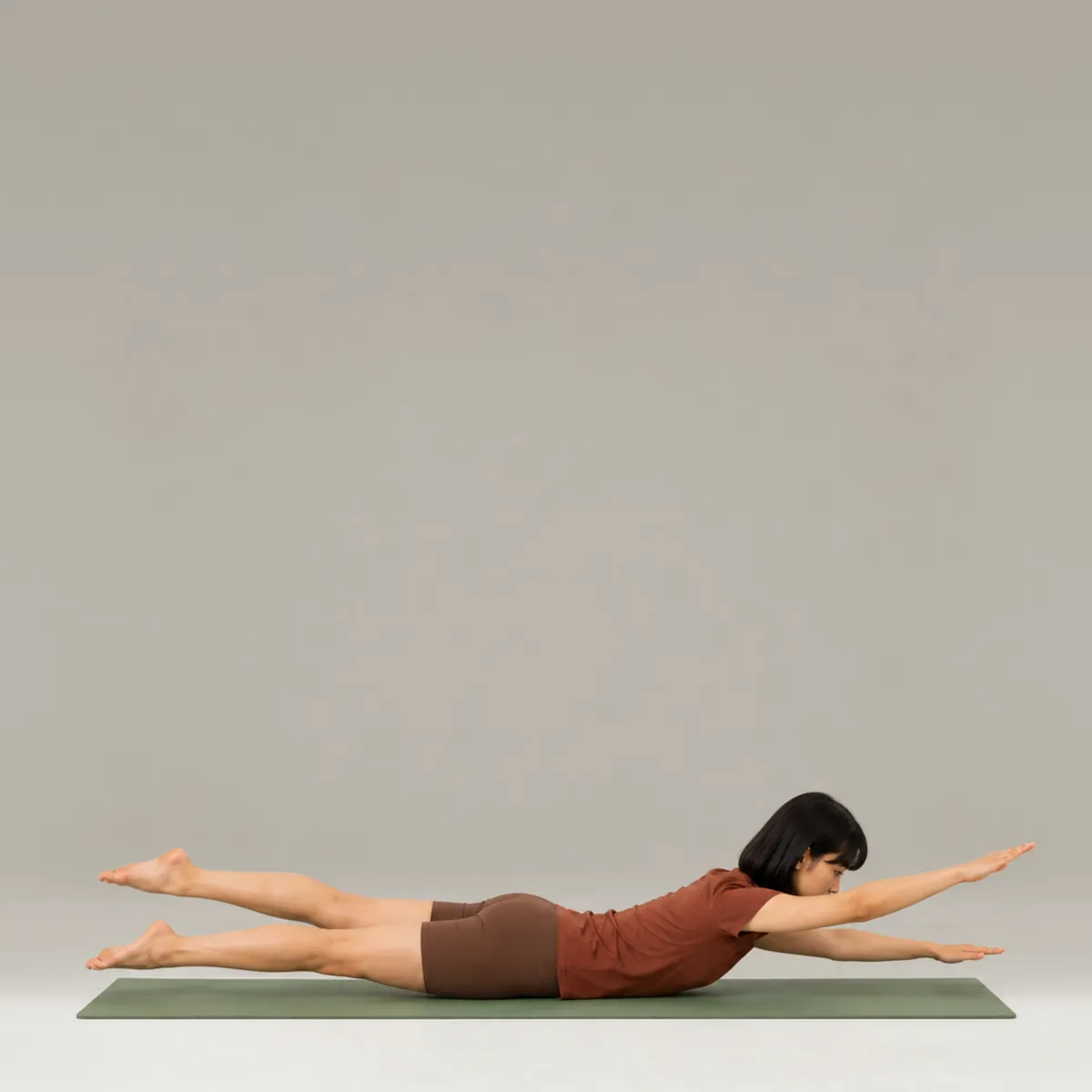
How to do Swimming
- 1Lie face down with your legs long and hip width apart, and your arms reaching overhead.
- 2Draw your belly gently away from the mat and press your pubic bone lightly down.
- 3Reach your arms and legs long so they hover just off the mat, with your head lifted in line with your spine.
- 4Lift your right arm and left leg a little higher, then switch to your left arm and right leg.
- 5Keep switching in a small, quick flutter, like swimming.
- 6Inhale for five counts and exhale for five counts as you swim.
- 7Continue for two or three breath cycles, then lower down and rest in child's pose.
Common mistakes and how to fix them
The head cranks up to look forward.
Keep your gaze down toward the top of your mat so the back of your neck stays long.
The lower back pinches from lifting too high.
Lower the arms and legs, reach them longer, and draw your belly in to support the spine.
The flutter is large and floppy.
Keep the movements small and controlled, with the limbs reaching long the whole time.
The shoulders hunch up around the ears.
Draw your shoulder blades gently down your back, and widen your arms slightly if needed.
Modifications
- Move only the arms or only the legs at first.
- Lift opposite arm and leg slowly, one pair at a time, without the flutter.
- Practice on hands and knees, reaching opposite arm and leg, as in bird dog.
- Place a small folded towel under your hips for more comfort.
Benefits
- Strengthens the back, glutes, and shoulders.
- Balances the forward bending of other mat exercises.
- Trains coordination of opposite arm and leg.
- Builds endurance in the muscles that support posture.
Breath
Inhale for five counts and exhale for five counts while you flutter, much like the hundred. Keep the breath moving and never hold it.
Take care
Take care with lower back or neck injuries, and keep the lift low if your back feels pinched. Stop if you feel sharp pain.
Swimming questions
What does pilates swimming work?
Swimming mainly strengthens the muscles along the back, the glutes, and the shoulders. The core works too, helping to keep the spine steady.
Why does pilates swimming bother my lower back?
Lifting the arms and legs too high can pinch the lower back. Keep the lift low, reach long, and try moving only the arms or only the legs first.
How long should I do pilates swimming?
Two or three full breath cycles of five counts in and five counts out is a typical set. Rest in child's pose afterward if your back wants a break.

