Yoga · Intermediate
Plow pose
Halasana
Also called Plough pose
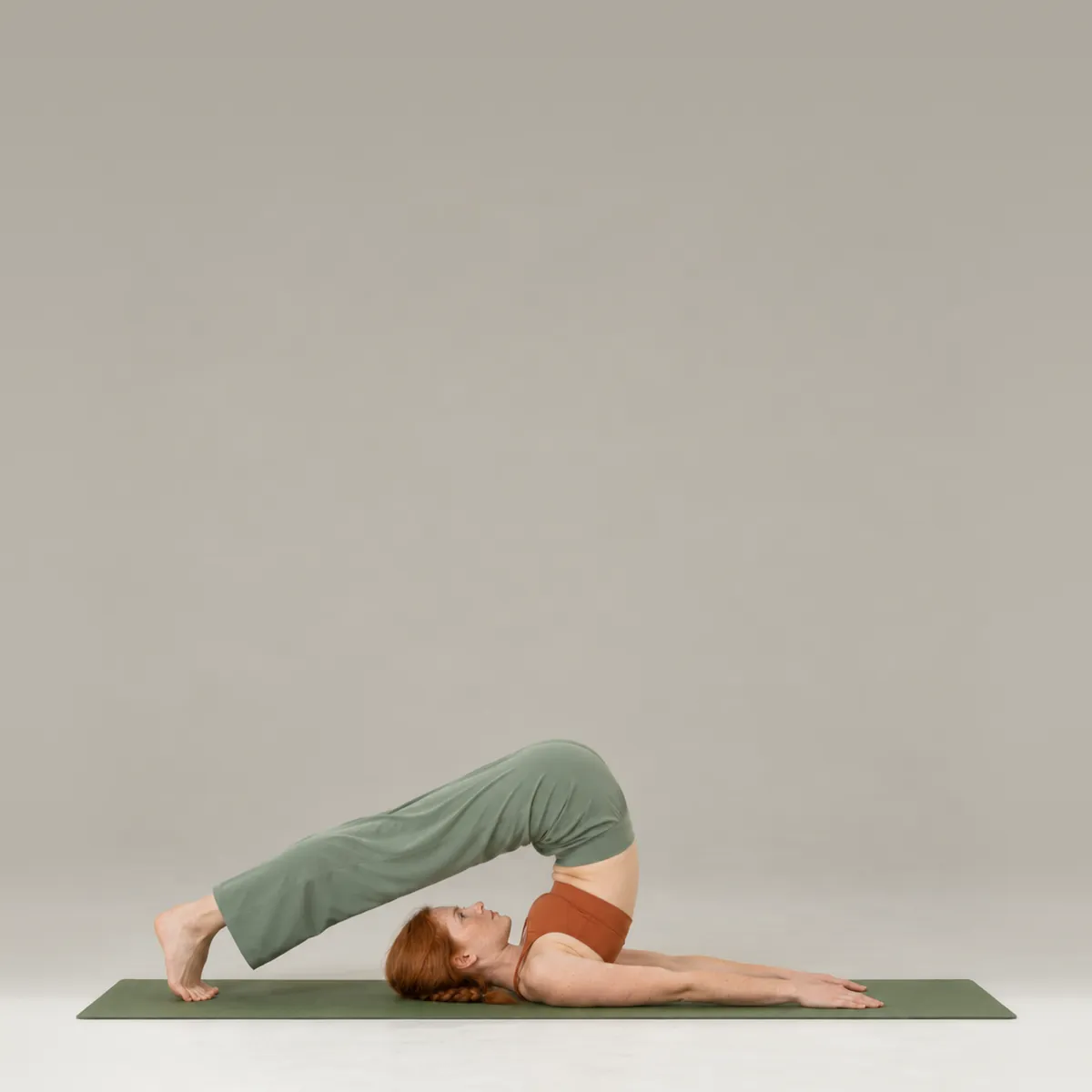
Plow pose is an inversion where you lie on your back, lift your hips over your shoulders, and lower your feet toward the floor behind your head. It stretches the whole back of the body, from the spine to the hamstrings. Because the pose bends your neck deeply, a careful setup matters far more than how low your feet go.
How to do Plow pose
- 1Fold one or two firm blankets and lie on your back with your shoulders on the blankets and your head on the mat.
- 2Rest your arms by your sides with your palms down, and bend your knees with your feet flat.
- 3Exhale, press your arms into the mat, and draw your knees toward your chest as you roll your hips up over your shoulders.
- 4Support your back with your hands, keeping your elbows about shoulder width apart.
- 5Slowly extend your legs over your head and lower your toes toward the floor only as far as feels comfortable.
- 6Keep your gaze toward your chest and never turn your head while you are in the pose.
- 7Hold for five to ten slow breaths, keeping your weight on your shoulders rather than your neck.
- 8To come out, bend your knees, place your hands on the mat, and roll down slowly one vertebra at a time.
Common mistakes and how to fix them
The weight rolls onto the back of the neck.
Fold a blanket under your shoulders, walk your shoulders in under you, and press your upper arms down to lift weight off your neck.
The head turns to look around.
Keep your gaze fixed toward your chest. If you need to check something, come out of the pose first.
The feet are forced down to the floor.
Rest your feet on a chair or block behind you, or keep your knees bent, so the back of your body can lengthen without strain.
The elbows splay wide and the back sinks.
Draw your elbows in toward shoulder width and walk your hands higher up your back for more support.
Modifications
- Rest your feet on the seat of a chair behind your head instead of reaching for the floor.
- Keep your knees bent toward your forehead for a gentler shape.
- Practice legs up the wall or bridge pose instead if inversions feel uncomfortable.
Benefits
- Stretches the spine, the shoulders, and the hamstrings.
- Builds awareness of the shoulders and upper arms as a steady base.
- Offers a quiet, inward focus near the end of a practice.
Breath
Breathe slowly through the nose. The breath can feel shallower here, so if it turns short or strained, bend your knees and come down.
Take care
Your neck should never carry your weight, so pad under your shoulders, keep your head still, and skip this pose with any neck injury or during pregnancy. Build comfort in bridge pose and legs up the wall first, and stop if you feel sharp pain or pressure in your neck.
Plow pose questions
Is plow pose bad for your neck?
Plow pose bends the neck deeply, so it can strain the neck if your weight rolls onto it. Pad under your shoulders, keep your head still, and skip the pose if you have a neck injury.
What if my feet do not touch the floor in plow pose?
That is very common. Rest your feet on a chair or blocks, or keep your knees bent, and let the shape develop over time.
What should I do after plow pose?
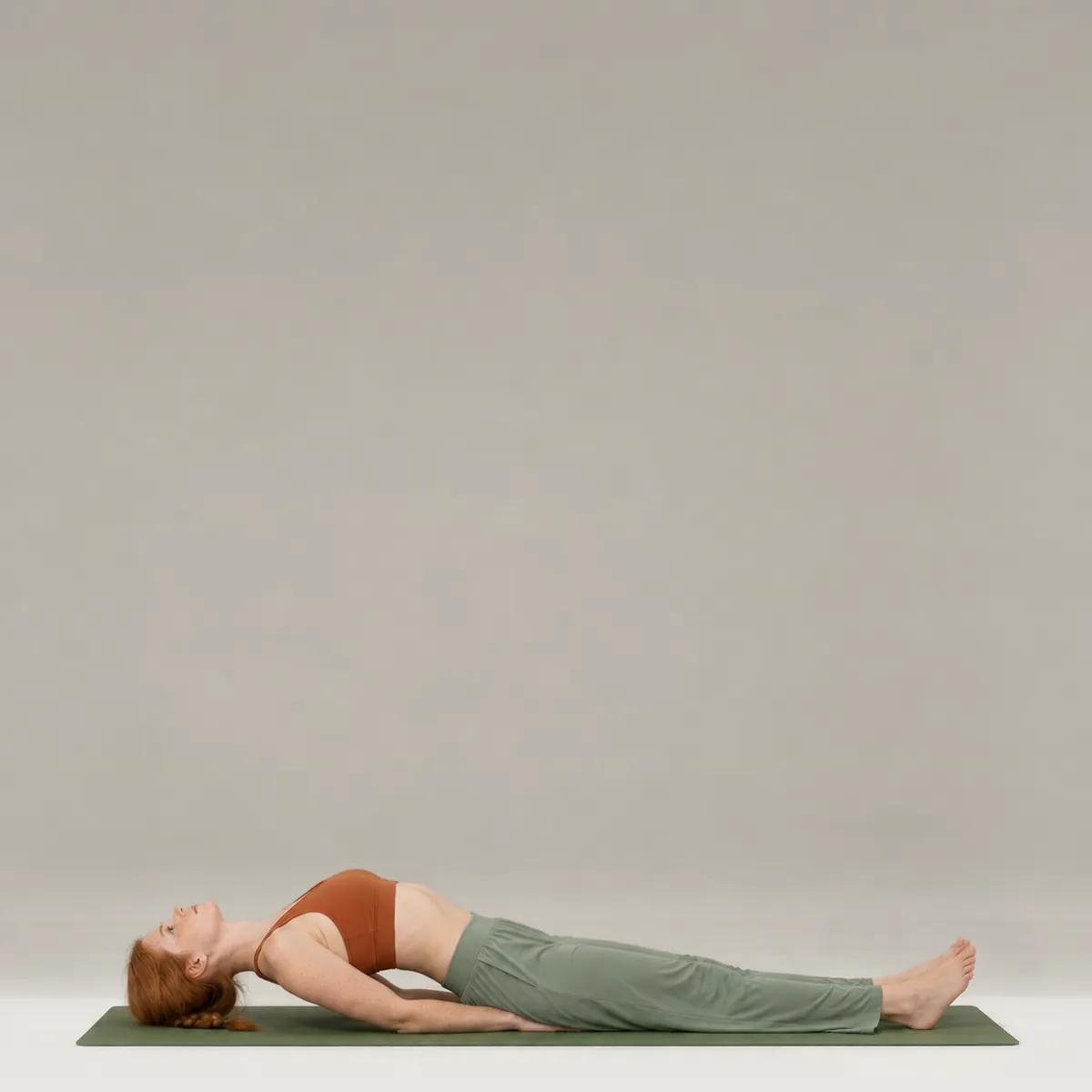
Many classes follow plow with a gentle counter pose such as fish pose, or a few breaths resting on your back. Roll down slowly before you move on.