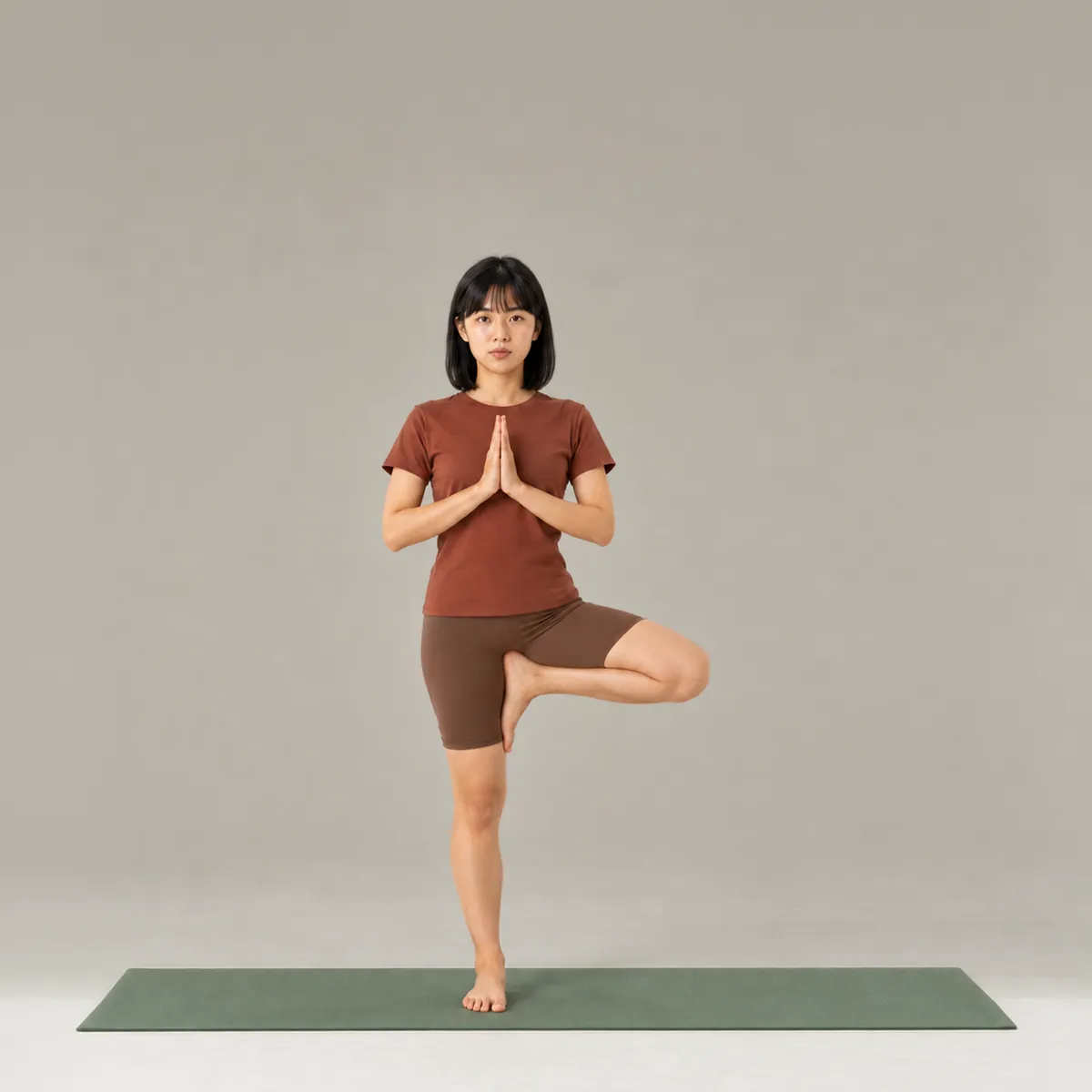
Starting yoga after 40: what to know before your first session

It's not too late, and you're not too stiff. Here's how to start in a way that respects your body.
Plenty of people start yoga in their forties, fifties, and beyond. Many find it at exactly the moment they notice their body asking for more care: a stiff back in the morning, a shoulder that complains, or a sense that strength and balance matter more than they used to.
Starting later does not mean starting at a disadvantage. It mostly means starting with a little more intention.
First, a sensible note: if you have a heart condition, high blood pressure, a joint replacement, osteoporosis, a recent injury, or any condition you are unsure about, talk to your doctor before starting a new exercise practice.
What changes after 40, and why yoga helps
Muscle mass and bone density gradually decline with age, connective tissue can feel less springy, and balance needs more practice to maintain. Recovery can take a little longer, too. None of this is a reason to avoid movement. It is a reason to choose movement well.
Yoga and pilates address many of these areas at once. They build strength with body weight, maintain range of motion in the joints, train balance, and teach breathing that helps the nervous system settle. They are also gentle enough to adapt to almost any starting point.
How to start well
- Begin with short sessions of 10 to 20 minutes, three times a week.
- Warm up gradually, especially in the morning when joints feel stiffer.
- Use props generously: blocks, a strap, a folded blanket under the knees.
- Favor slow, controlled movement over long passive stretching at first.
- Include balance and strength work, not just flexibility.
- Treat sharp pain as a stop signal, never something to push through.
Form matters more, not less
Younger bodies often get away with sloppy alignment for a while. With age, the cost of a knee collapsing in a lunge or a rounded back in a fold tends to show up sooner. Good alignment is what lets you keep practicing for years.
That makes feedback especially valuable. Group classes can be great, but one teacher in a full room cannot watch everyone, and video classes cannot watch at all.
How Kova supports a later start
Kova begins with an intake that asks about your experience, goals, injuries, and the days you can practice, then builds a progressive plan that starts with gentle foundations. On-device pose tracking reads your alignment as you move and offers calm spoken cues when something drifts, like a knee moving inward or shoulders lifting. It is designed to be supportive, not to grade you.
It also remembers. If your hips felt tight on Tuesday, the next session opens gentler. When you would rather not look at a screen, audio-only mode keeps the breath pacing and verbal cues. Kova is not medical advice and not a substitute for a physiotherapist if you need one, but it can make home practice feel genuinely guided.
Expect steady, real progress
Many people notice improvements in stiffness and mobility within a few weeks of consistent practice, with strength and balance following over a few months. Progress may feel slower than you want, but it compounds.
Your body has carried you a long way. It deserves a practice that listens.
Questions this guide answers
Is it too late to start yoga at 40 or 50?
No. Many people start yoga later in life and benefit from better mobility, strength, and balance. Begin gently and check with your doctor if you have health concerns.
What type of yoga is best for beginners over 40?
Gentle, slower styles focused on alignment, such as hatha or foundational flows, are a good starting point. Pilates is a strong complement for core strength.
How can I avoid injury when starting yoga later in life?
Warm up gradually, use props, move slowly, avoid forcing range, and stop if you feel sharp pain. Real-time feedback on alignment can also help.
A coach that sees you move.
Pre-order Kova on the App Store. It downloads automatically on release day, and your first practice is free.